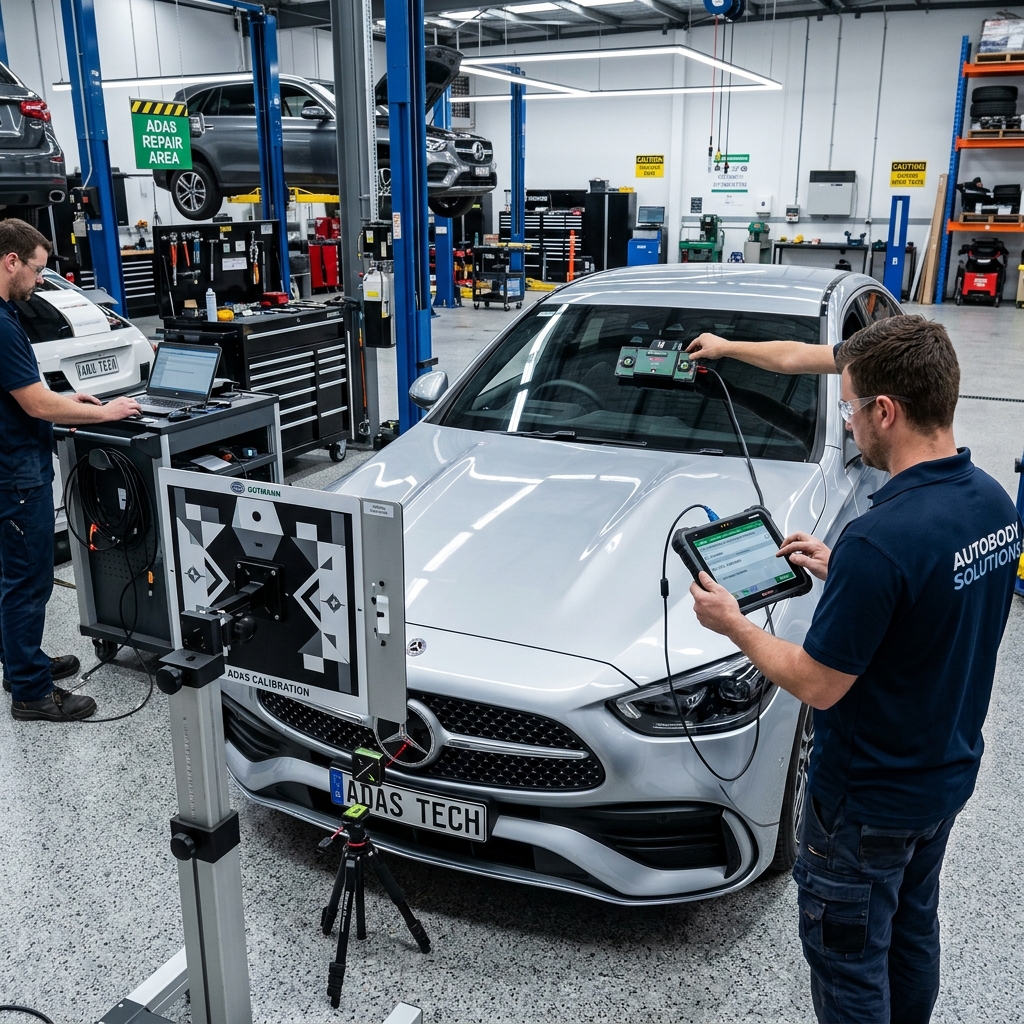
Modern vehicles use advanced driver-assistance systems to help drivers recognize potential hazards and respond to changing road conditions. Two important examples are Forward Collision Warning (FCW) and Automatic Emergency Braking (AEB). Depending on the vehicle, these systems may use a forward-facing camera, radar sensor, or a combination of technologies to detect vehicles and other objects ahead.
Although these systems can improve driver awareness, they depend on sensors and components being positioned and calibrated according to the vehicle manufacturer's specifications. After a collision, even when the visible damage appears relatively minor, certain repairs may affect the components or mounting points that support these safety technologies.
For drivers looking for collision repair in Vancouver, WA, understanding how these systems work can help explain why a repair may involve more than restoring the vehicle's exterior appearance.
What Are Forward Collision Warning and Automatic Emergency Braking?
Forward Collision Warning is designed to alert a driver when the vehicle detects a potential forward collision. Depending on the make, model, and system configuration, the warning may appear on the instrument panel, produce an audible alert, or use another notification.
Automatic Emergency Braking can take the process a step further. If the system determines that a collision risk is sufficiently high, it may apply the brakes automatically. Some vehicles also provide brake assistance or additional warnings before an impact occurs.
These features are not identical across all vehicles. Their operating conditions, detection capabilities, warning thresholds, and braking behavior depend on the manufacturer's design. Drivers should always consult their owner's manual to understand the specific features available in their vehicle.
Both systems rely on accurate information about the environment ahead. If a camera or radar sensor is displaced, obstructed, damaged, or incorrectly calibrated, the system may not interpret the surrounding conditions as intended.
Why Collision Damage Can Affect Driver-Assistance Systems
A collision can affect the components that support driver-assistance technology even if the sensors themselves do not show obvious external damage.
For example, a front-end impact may affect a sensor bracket, mounting point, bumper assembly, grille, or other component in the system's detection area. Depending on the vehicle's design and the extent of the damage, repairs to these areas may require a sensor inspection or calibration procedure.
A camera mounted near the windshield or behind the rearview mirror may also be affected when related components are removed, replaced, or disturbed during a repair. Similarly, a radar sensor positioned behind a grille or within a bumper area may depend on a specific mounting angle and location.
The important point is that the need for calibration is vehicle-specific. Not every collision requires every driver-assistance system to be calibrated. The correct procedure depends on the vehicle manufacturer's requirements, the damage sustained, the parts repaired or replaced, and the work performed.
A professional collision assessment should identify whether the affected systems require inspection, diagnostic checks, calibration, or referral to a suitably equipped specialist.
Why Sensor Position and Calibration Matter
Driver-assistance sensors do not simply need to be present and powered on. They must also operate within the tolerances established by the manufacturer.
A camera may analyze lane markings, vehicles, pedestrians, and other visual information. A radar sensor may measure the distance and relative movement of objects ahead. The vehicle's control systems then use this information to help determine whether a warning or braking response is appropriate.
If a sensor is mounted at an incorrect angle, its interpretation of the road environment may be affected. A small change in position can matter because the sensor is designed to monitor a particular field of view.
Calibration procedures help establish the correct relationship between the sensor and the vehicle. Depending on the vehicle, the process may involve specialized targets, diagnostic equipment, controlled workshop conditions, a prescribed driving procedure, or a combination of these methods.
Calibration should follow the manufacturer's service information. A generic procedure is not an adequate substitute for the requirements of a particular make and model.
Warning Lights Are Not the Only Reason for an Inspection
Some drivers assume that a driver-assistance system must be working correctly if no warning light appears on the dashboard. That assumption can be misleading.
A warning light or dashboard message is useful information, but the absence of a warning does not independently prove that a sensor is correctly positioned or calibrated. The available self-diagnostic functions and warnings differ between vehicles and systems.
Following a collision, the need for inspection should be based on the vehicle's repair requirements and the components affected, rather than on warning lights alone.
Drivers should also pay attention to messages indicating that a safety feature is unavailable, limited, or temporarily disabled. Dirt, snow, heavy rain, glare, or other environmental conditions can affect some systems, but a persistent warning after a collision should not be dismissed without appropriate evaluation.
If a warning appears, follow the owner's manual and have the vehicle assessed by a qualified professional. Do not assume that restarting the vehicle or clearing a message resolves the underlying issue.
Which Collision Repairs May Require an ADAS Check?
The need for a driver-assistance system inspection depends on the vehicle and the repair. Work that may trigger manufacturer-specified inspection or calibration requirements includes:
- Repair or replacement of components that house or support a forward-facing radar sensor.
- Repairs involving a camera's mounting location or related windshield components.
- Replacement of a sensor, bracket, grille, bumper component, or other part identified in the manufacturer's procedure.
- Structural or body repairs that may affect a sensor's position relative to the vehicle.
- Other repairs specifically identified by the manufacturer as requiring a system check or calibration.
This list is not a universal rule. Some procedures require additional checks for certain repairs, while other repairs may not require calibration. A technician should consult the appropriate service information instead of relying on a one-size-fits-all checklist.
What Happens During an ADAS Assessment?
The assessment begins with understanding the collision and identifying the areas that were damaged or repaired. The repair team should consider the vehicle's equipment, the location of its sensors, and the manufacturer's relevant service requirements.
Depending on the situation, the process may include a visual inspection of accessible components and mounting points, a diagnostic scan, a review of diagnostic trouble codes, and confirmation of whether calibration is required.
If calibration is necessary, the procedure must be completed using the correct equipment and method for the vehicle. Some systems require static calibration in a controlled workshop environment. Others may require dynamic calibration under prescribed driving conditions. Certain vehicles require a combination of procedures.
The work may need to be completed by a facility with the appropriate ADAS calibration equipment or by a qualified specialist. The key is that the required procedure is identified, performed correctly, and documented where applicable.
A diagnostic scan alone should not automatically be treated as proof that calibration has been completed. Reading fault codes and calibrating a sensor are different operations, although both may form part of the required process.
Can You Continue Driving if a Warning Appears?
The appropriate response depends on the warning, the vehicle, and the conditions. Some systems may become unavailable while leaving the vehicle otherwise drivable. Other messages may indicate a more serious problem or require the driver to stop safely.
Follow the vehicle manufacturer's instructions and do not rely on Forward Collision Warning or Automatic Emergency Braking if the system indicates that it is unavailable or malfunctioning. Continue to drive attentively, maintain a safe following distance, and use normal braking and steering practices.
If a collision has occurred and a safety system warning remains active, arrange an assessment rather than assuming the warning will disappear on its own. If the vehicle shows signs of unsafe operation or the owner's manual directs you to stop driving, follow those instructions and arrange appropriate assistance.
These technologies are driver aids, not replacements for attentive driving. Even when fully operational, they may not detect every hazard or prevent every collision.
Questions to Ask Your Collision Repair Provider
When discussing repairs, ask whether the vehicle is equipped with Forward Collision Warning, Automatic Emergency Braking, or other driver-assistance features.
You can also ask:
- Did the collision affect any components associated with the forward-facing camera or radar?
- Does the vehicle manufacturer require an inspection or calibration following the repairs being performed?
- Will diagnostic scanning be necessary?
- If calibration is required, who will complete it and with what vehicle-specific procedure?
- Will the completed inspection or calibration be documented?
These questions help establish whether the repair plan considers the relevant safety technology as well as the visible body damage.
Choosing Collision Repair in Vancouver, WA
Choosing an auto body shop in Vancouver, WA, involves more than comparing the appearance of a finished repair. Today's vehicles may combine conventional body components with cameras, radar sensors, and electronic safety systems. The repair process should account for these systems whenever the damage or repair procedure makes them relevant.
Motolux Collision Center can be a starting point for discussing collision damage, the areas that require inspection, and the repair process for your vehicle. When driver-assistance systems are involved, ask how manufacturer-specific requirements will be identified and whether any necessary calibration will be completed in-house or coordinated with an appropriately equipped specialist.
The correct process depends on the vehicle. Clear communication about the repair scope, required inspections, and any specialist work helps drivers understand what is needed before the vehicle is returned.
The Bottom Line
Forward Collision Warning and Automatic Emergency Braking depend on vehicle-specific sensors and control systems. A collision or certain repair operations may affect these components even when the visible damage seems limited.
Calibration is not automatically required after every accident, but it should not be overlooked when the manufacturer specifies it. A proper assessment identifies the systems affected, checks the relevant service requirements, and ensures that any necessary diagnostic or calibration work is addressed.
For drivers in Vancouver, WA, asking about driver-assistance system requirements during the collision repair process is a practical way to help ensure that both the vehicle's appearance and its relevant safety technology receive appropriate attention.
Contact Motolux Collision Center to discuss your collision repair needs and ask which inspections may be appropriate for your vehicle.