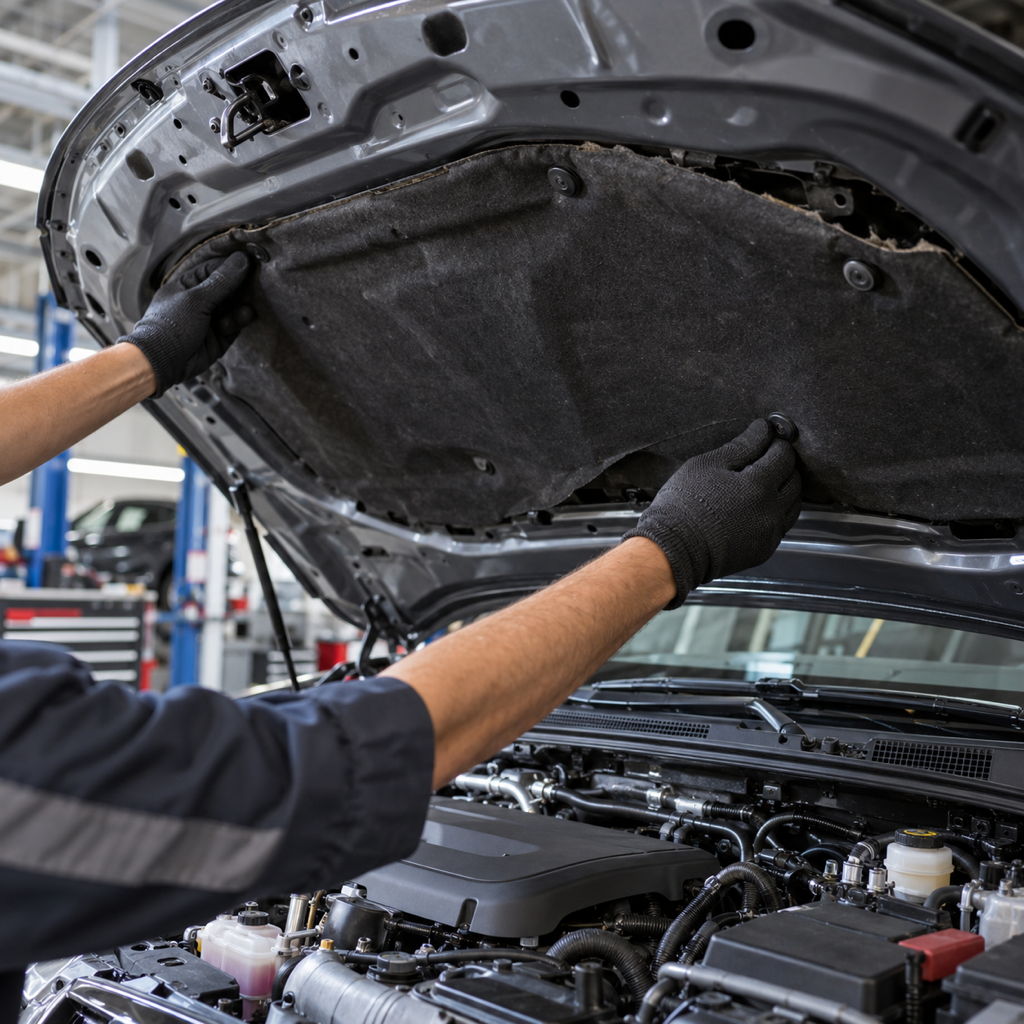
When people think about collision damage under the hood, they usually think about major mechanical components. But the underside of the hood itself contains several components that can be affected by an accident.
Modern vehicles may have insulation, acoustic liners, clips, heat-resistant materials, wiring, and other components attached to or positioned around the hood.
Some of these parts may not be noticeable from outside the vehicle.
After a front-end collision, a vehicle owner may focus on the hood's exterior paint and alignment while overlooking what happened underneath it.
For drivers looking for an auto body shop in Vancouver, WA, understanding these less obvious components provides another reason to have the entire damaged area properly inspected.
What Is Under the Hood?
The underside of a vehicle's hood is not always simply painted metal.
Depending on the vehicle, it may include:
- Acoustic insulation
- Heat-resistant insulation
- Hood liner material
- Retaining clips
- Fasteners
- Wiring or electrical components
- Hood-mounted components
- Service labels or manufacturer components
The exact design varies considerably between vehicles.
Some vehicles have substantial insulation, while others use a simpler hood design.
Why Hood Insulation Exists
Hood insulation can serve different purposes depending on the vehicle.
It may help manage noise, vibration, or heat and can also protect or separate certain components.
Because the material is located underneath the hood, it is easy for vehicle owners to overlook its condition after an accident.
However, if the hood was damaged, replaced, repaired, or subjected to impact, the underside deserves attention as well.
How a Collision Can Affect the Hood Underside
A collision can deform or disturb components that are not immediately visible from the front of the vehicle.
For example, an impact may cause:
- Insulation material to become displaced
- Retaining clips to break
- A liner to sag
- Fasteners to loosen
- Material to tear
- Components to contact the hood where they did not previously
- Damage around mounting points
These issues may not affect how the vehicle looks when the hood is closed.
Why Broken Clips Matter
Small retaining clips may seem insignificant.
However, their job is to keep the liner or insulation securely positioned.
If clips break during a collision or hood repair, the material may become loose.
A loose liner can create rattling or movement when the vehicle is driven.
In some cases, it can also interfere with other components if it is no longer secured in its intended position.
The appropriate repair depends on the vehicle manufacturer's design and the condition of the component.
A New Rattle Can Be a Clue
One of the first signs a vehicle owner may notice after repair is a new noise.
A light rattle from under the hood can have many possible causes.
But if the noise appeared after an accident or after the hood was repaired, the underside of the hood should be considered as one possible source.
This does not mean the liner is automatically responsible.
The important point is that the new symptom should be investigated rather than ignored.
Heat and Under-Hood Materials
The engine compartment is exposed to heat.
That is one reason certain vehicles use heat-resistant materials in the hood area.
If a component has been displaced or damaged, its original position may no longer be maintained.
Collision repair technicians can evaluate whether the affected material remains properly installed and whether any replacement is appropriate.
The exact requirements depend on the vehicle.
Hood Insulation Is Not the Same on Every Vehicle
Vehicle manufacturers use different materials and designs.
Some hoods may have molded insulation panels. Others may use different acoustic or heat-management materials.
Because of this, collision repair should follow the requirements for the specific vehicle rather than applying one universal repair method.
This is particularly important when components are replaced.
What Happens If the Hood Is Replaced?
When a hood is replaced after a collision, the repair process may involve more than transferring the exterior appearance.
Depending on the vehicle, technicians may need to consider the condition and installation of components attached to the underside of the hood.
The goal is to ensure that the replacement hood and associated components are properly fitted for that particular vehicle.
Why This Is a Collision Repair Issue
It may seem unusual to discuss insulation when talking about auto body repair.
But collision repair includes many components that are not visible when the vehicle is parked.
A professional repair assessment considers the affected areas and the vehicle's construction rather than limiting the inspection to painted surfaces.
That is especially important when a collision involves the hood or front portion of the vehicle.
What Drivers Should Look For
After receiving a vehicle back from collision repair, pay attention to any changes you did not notice before the accident.
These could include:
- A new rattle under the hood
- A loose-looking liner
- Insulation hanging lower than before
- Missing clips
- Unusual contact marks
- A change in hood operation
- New sounds when driving
If something seems different, report it to the repair facility.
Why a Professional Inspection Is Better Than Guessing
A vehicle owner may see a loose piece of material and assume it is harmless.
Another owner may see the same component and assume it represents serious mechanical damage.
Neither assumption is necessarily correct.
The best approach is to have the affected area inspected so the technician can determine what the component is, why it has moved, and whether repair or replacement is necessary.
Motolux Collision Center in Vancouver, WA
At Motolux Collision Center, collision repair involves more than correcting visible dents and refinishing panels.
When a collision affects the hood or surrounding front-end areas, the condition of associated components can be evaluated as part of the repair process.
The appropriate inspection depends on the vehicle's design and the damage caused by the accident.
Small Components Can Still Matter
A hood liner or retaining clip may not look important compared with a damaged bumper or hood.
But every component has a purpose.
Collision repair is about understanding how the vehicle was affected and making appropriate repairs based on the actual condition of the vehicle.
If your hood was damaged in an accident and you notice a new noise, loose material, or anything unusual underneath it afterward, mention it during the inspection.
Final Thoughts
The underside of the hood is easy to overlook because most drivers only see it when the hood is opened.
But after a collision, that area can contain clues about what happened during the impact and whether any supporting components were disturbed.
For Vancouver, WA drivers, a thorough collision repair inspection should account for the vehicle's actual construction rather than focusing only on the exterior paint and panels.
If you have been involved in an accident and your hood or front end was damaged, Motolux Collision Center can evaluate the affected areas and determine what repair work is appropriate for your vehicle.