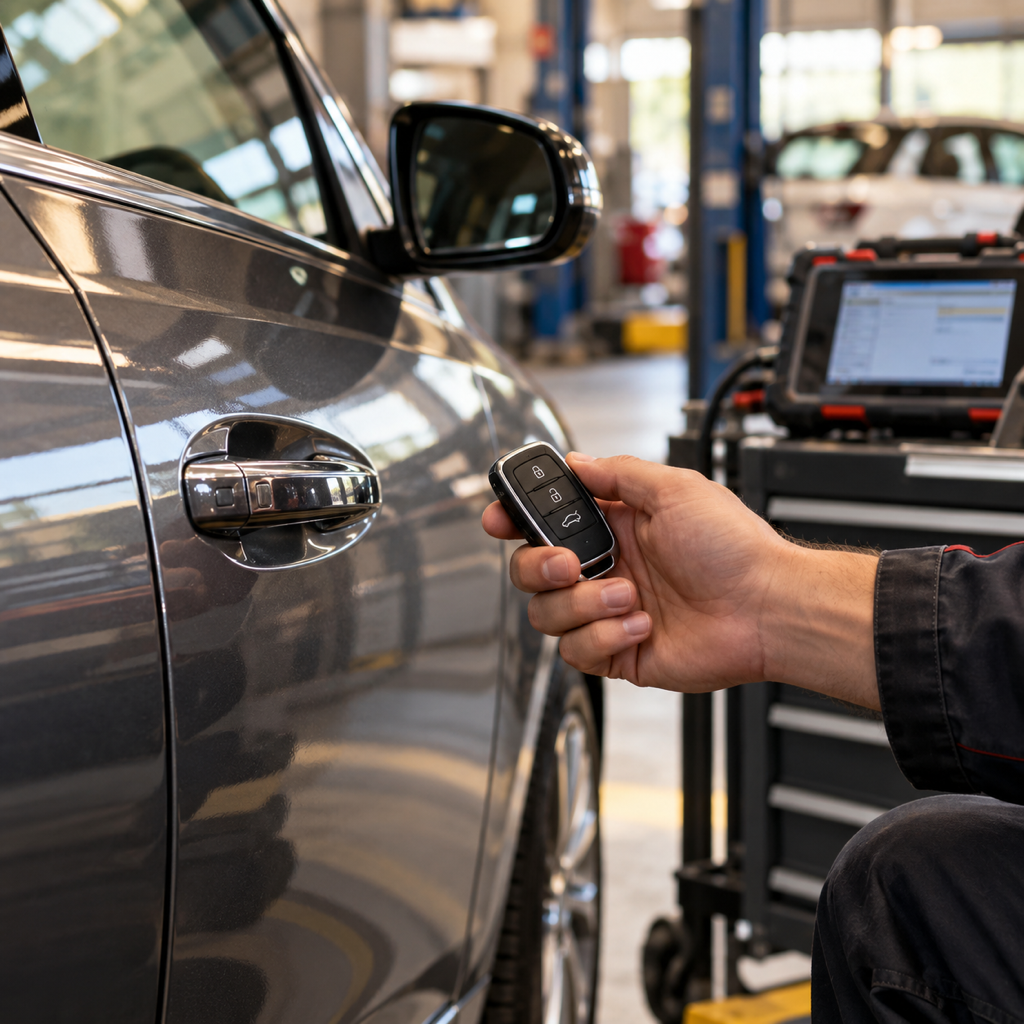
Modern vehicles often allow drivers to unlock doors, start engines, and open luggage compartments without inserting a traditional key. These convenience features rely on electronic components that communicate with the vehicle and respond to the driver's key fob or smart key.
Although keyless entry systems may seem unrelated to collision repair, an accident can sometimes affect the components or wiring involved in their operation.
A vehicle owner might notice that the doors no longer unlock consistently, the smart key is not detected as expected, or the remote functions behave differently after an accident.
These symptoms can have several possible causes. A weak key-fob battery, interference, a vehicle battery problem, or an electronic fault may all produce similar behavior. However, when the change occurs immediately after a collision, the affected vehicle systems deserve appropriate investigation.
For drivers looking for auto body repair in Vancouver, WA, understanding how keyless entry works can help them recognize when an electronic concern should be reported during the repair process.
How Keyless Entry Works
A keyless entry system allows a vehicle to recognize signals from a compatible remote or smart key.
The exact technology varies by manufacturer and model. Some systems primarily use remote radio signals, while passive-entry systems may use additional communication methods to determine whether the key is near the vehicle.
Depending on the vehicle, the system may include:
- A key fob or smart key
- Exterior door-handle sensors
- Antennas
- Electronic control modules
- Door-lock actuators
- Wiring and electrical connectors
- A vehicle battery
- Related security and immobilizer components
These components work together to provide access and, in some vehicles, enable push-button starting.
Because the system relies on multiple parts, a failure does not always mean the key fob itself is defective.
How a Collision Could Affect Keyless Entry
Collision-related electronic problems depend on the location and severity of the impact.
If an accident damages a door, door handle, quarter panel, bumper area, or related wiring route, technicians may need to consider whether any keyless entry components in the affected area have also been disturbed.
For example, a door impact may affect components located within or around the door assembly.
Damage in another area may be relevant if the vehicle's antenna or wiring is located near the affected panels.
The specific possibilities depend on the vehicle's design.
A collision does not automatically cause keyless entry failure, but new symptoms after an accident should be documented.
Signs That Something Has Changed
Keyless entry problems can appear in different ways.
A driver may notice that:
- The remote unlock button works inconsistently
- One door fails to respond as expected
- Passive entry no longer works reliably
- The vehicle does not consistently recognize the smart key
- The trunk or liftgate responds differently to the remote
- Locking and unlocking functions behave intermittently
- A related warning message appears
- Push-button starting behaves differently
These symptoms can have several causes, so the repair process should begin with diagnosis rather than immediately replacing parts.
Rule Out the Simple Causes First
Not every keyless entry issue is caused by collision damage.
A weak key-fob battery is a common possibility. Signal interference, a vehicle battery problem, a faulty remote, or a pre-existing electronic fault may also explain the symptoms.
A useful first step is to tell the repair facility exactly what has changed and when it began.
The technician can then determine which checks are appropriate for the particular vehicle.
If the key fob also stopped working on another vehicle or has been physically damaged, that information may help narrow the possibilities. However, drivers should not assume that the key is responsible without evaluating the circumstances.
Why Door Handles and Sensors Matter
Many passive-entry vehicles use sensors or electronic components around exterior door handles.
These allow the vehicle to respond when the driver approaches or touches a designated area while carrying the smart key.
If the collision involved a door or surrounding body panel, the associated components may deserve inspection.
Depending on the vehicle, a door repair may require attention to electrical connectors, sensors, wiring, or other components that are not visible from the exterior.
A door can appear properly repaired while an electronic function still requires diagnosis.
Antennas and Signal Detection
Some vehicles use multiple antennas to help detect or communicate with a smart key.
Their location and purpose vary by vehicle design.
If an antenna, connector, or associated wiring is damaged, the vehicle may have difficulty detecting the key in certain situations.
This is only one possible explanation for key-recognition problems. Similar symptoms can result from a weak key battery, a faulty receiver, interference, or other electronic issues.
A technician should use the vehicle's diagnostic information and appropriate testing procedures to determine the cause.
Why the Vehicle Battery Can Matter
Keyless entry relies on the vehicle's electrical system.
If the vehicle battery is discharged, disconnected, damaged, or experiencing a charging-related issue, electronic functions may not behave normally.
The relationship between the collision and the battery depends on the circumstances.
For example, some repair procedures require electrical disconnection, while a collision may also affect electrical components in the damaged area.
If multiple electronic systems develop problems at the same time, the vehicle's electrical condition may be one of the areas to investigate.
Why Replacing the Key Fob May Not Solve the Problem
When a smart key stops working, replacing its battery or the entire remote may seem like the easiest solution.
Sometimes that is appropriate.
But if the problem comes from a damaged sensor, wiring connection, antenna, control module, or vehicle power supply, replacing the key fob alone may not resolve it.
A systematic diagnosis helps avoid replacing components without confirming the source of the fault.
Keyless Entry and Vehicle Security
Keyless entry systems can be connected to the vehicle's security and immobilizer functions.
Depending on the vehicle, a problem with key recognition may affect access, starting, or other convenience features.
These functions are manufacturer-specific, so the appropriate diagnostic and repair procedures differ.
If a vehicle develops key-recognition problems after an accident, the repair facility should determine whether the issue is isolated to remote access or involves another related system.
What Drivers Should Report After a Collision
When taking your vehicle for collision repair, mention any changes in electronic operation that appeared after the accident.
Useful details include:
- Which doors are affected
- Whether the physical key still works, if the vehicle has one
- Whether the remote buttons work
- Whether passive entry works
- Whether the vehicle recognizes the smart key for starting
- Whether the issue happens every time or only occasionally
- Whether other electrical functions have changed
This information can help technicians identify the appropriate diagnostic path.
Motolux Collision Center in Vancouver, WA
At Motolux Collision Center, collision-related damage should be evaluated according to the vehicle's construction, the location of the impact, and the symptoms reported by the owner.
When a collision is followed by keyless entry problems, the affected electronic systems may require additional diagnosis beyond exterior body repair.
The appropriate process depends on the vehicle and the issue identified. Some electronic faults may require manufacturer-specific diagnostic equipment or specialist support.
Why Functional Checks Matter After Body Repair
A successful collision repair involves more than making the exterior panels look correct.
Where the accident or repair work may have affected electronic components, those systems should be evaluated as appropriate to the vehicle and repair requirements.
Keyless entry is a useful example because its components can be distributed across different areas of the vehicle.
If the system stops working normally after an accident, reporting the symptom can help the repair team determine whether further inspection is needed.
Final Thoughts
Keyless entry systems make modern vehicles more convenient, but they depend on electronics, antennas, sensors, and electrical connections working together.
If your vehicle's remote locking, passive entry, or smart-key recognition changes after a collision, do not assume the key fob is necessarily the cause.
Document the symptoms and have the issue evaluated in the context of the accident.
For drivers seeking collision repair in Vancouver, WA, Motolux Collision Center can assess collision-related vehicle damage and help determine when additional electronic diagnosis is needed.