What Is a Vehicle Frame and How Can Collision Damage Affect It?
Published on September 16, 2026
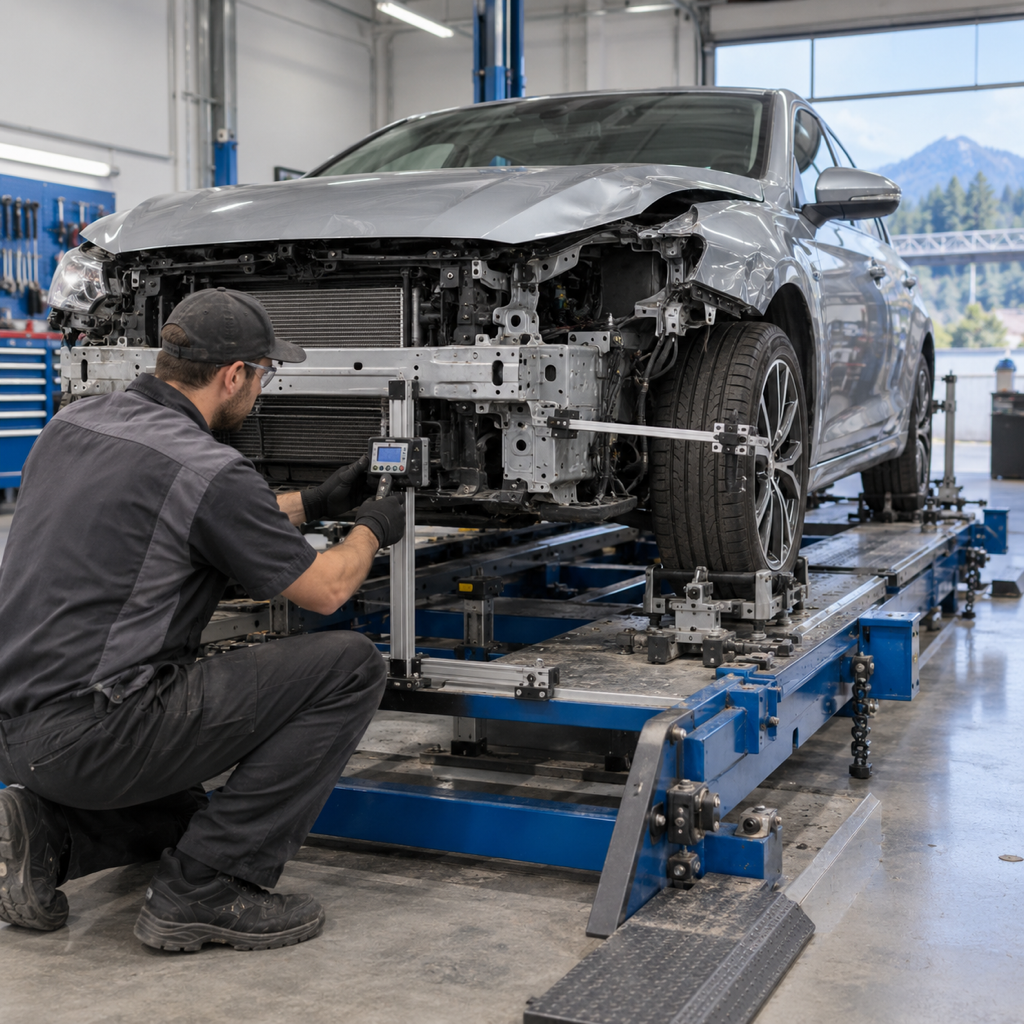
When people think about vehicle damage after an accident, they usually notice the parts that are easiest to see: a crushed bumper, dented fender, broken light, or damaged door. What is much harder to see is what happened to the structure underneath the vehicle's body. The vehicle's frame or structural assembly provides the foundation that supports many of its major systems. It is designed to help the vehicle maintain its shape, support mechanical components, and manage forces during a collision. After an accident, even when the exterior damage appears manageable, the underlying structure may need to be carefully inspected. For drivers looking for collision repair in Vancouver, WA, understanding structural damage can help explain why professional collision repair involves much more than replacing damaged body panels.
What Does the Vehicle Structure Do?
The exact construction varies depending on the vehicle. Many modern passenger vehicles use a unibody design, where the body and structural components are integrated into one engineered structure. Trucks and some other vehicles may use a body-on-frame design. Regardless of the design, the structural assembly plays an important role in maintaining the vehicle's geometry. It supports or connects areas associated with:
- Suspension
- Steering
- Engine and drivetrain components
- Body panels
- Passenger compartment
- Impact-management structures
The structure is designed with specific dimensions and attachment points. These dimensions matter when the vehicle is being restored after a collision.
How Can a Collision Change the Structure?
Collision forces can be extremely complex. The direction, speed, location, and angle of an impact all influence how energy travels through the vehicle. A collision may cause structural components to:
- Bend
- Shift
- Twist
- Compress
- Deform
Not all structural damage is dramatic. Sometimes the change is small enough that the vehicle still drives and looks relatively normal. That is precisely why professional inspection is important.
Why Structural Damage May Not Be Visible
Body panels can hide a significant portion of the vehicle's structural assembly. A fender may cover important mounting areas. A bumper can hide reinforcement components. Interior carpeting can conceal sections of the floor. A visual inspection of the exterior therefore cannot always determine whether the underlying structure remains within the required dimensions. Professional technicians use inspection and measuring procedures to identify deviations that may otherwise go unnoticed.
What Happens If Structure Isn't Properly Restored?
A vehicle's structural dimensions influence the positioning of many other components. If the structure isn't properly restored, it can potentially affect:
- Panel fitment
- Door and hood alignment
- Suspension geometry
- Steering behavior
- Tire wear
- Vehicle stability
One structural issue can therefore create several seemingly unrelated problems. For example, a small change in a suspension mounting area may eventually appear as an alignment or tire-wear issue rather than an obvious structural problem.
Precision Is Critical During Structural Repair
Structural repair isn't something that should be based on appearance alone. Technicians use vehicle-specific measurements and appropriate equipment to determine where the structure is positioned and whether it needs to be restored. The objective is to bring the vehicle back to the dimensions required by its design. This is one of the major differences between simply making a damaged vehicle look better and performing a comprehensive collision repair.
Does Every Collision Damage the Frame?
No. A collision does not automatically mean that a vehicle has structural damage. The extent of damage depends on numerous factors, including the severity and location of the impact and how the vehicle's structure absorbed the collision. That is why inspection is important. It determines what actually happened rather than assuming structural damage—or assuming there isn't any.
Signs That May Suggest a Structural Problem
While only proper inspection can determine structural condition, drivers may notice changes after an accident such as:
- Multiple body panels no longer fitting correctly
- Doors becoming difficult to close
- Unusual vehicle behavior
- Persistent alignment problems
- Uneven gaps between panels
- New noises or vibrations
These symptoms can have many causes, but following a collision they are worth having professionally evaluated.
Why Professional Collision Repair Matters in Vancouver, WA
For Vancouver drivers, a vehicle may be used for everything from short city trips to longer highway commutes. A vehicle that has been involved in an accident needs to perform reliably under all of these conditions. Professional collision repair focuses on restoring the complete vehicle rather than treating only the damaged exterior.
Final Thoughts
Structural damage is one of the most important reasons not to judge a collision by appearance alone. A vehicle can look reasonably good from the outside while still requiring detailed structural inspection. If your vehicle has been involved in an accident, having it evaluated by an experienced auto body shop in Vancouver, WA can help identify hidden structural concerns and determine what repairs are actually necessary.
Get a Professional Structural Inspection
Contact Motolux Collision Center to evaluate hidden structural damage after a collision.