Why Your Vehicle's Underbody Should Be Inspected After a Collision
Published on September 24, 2026
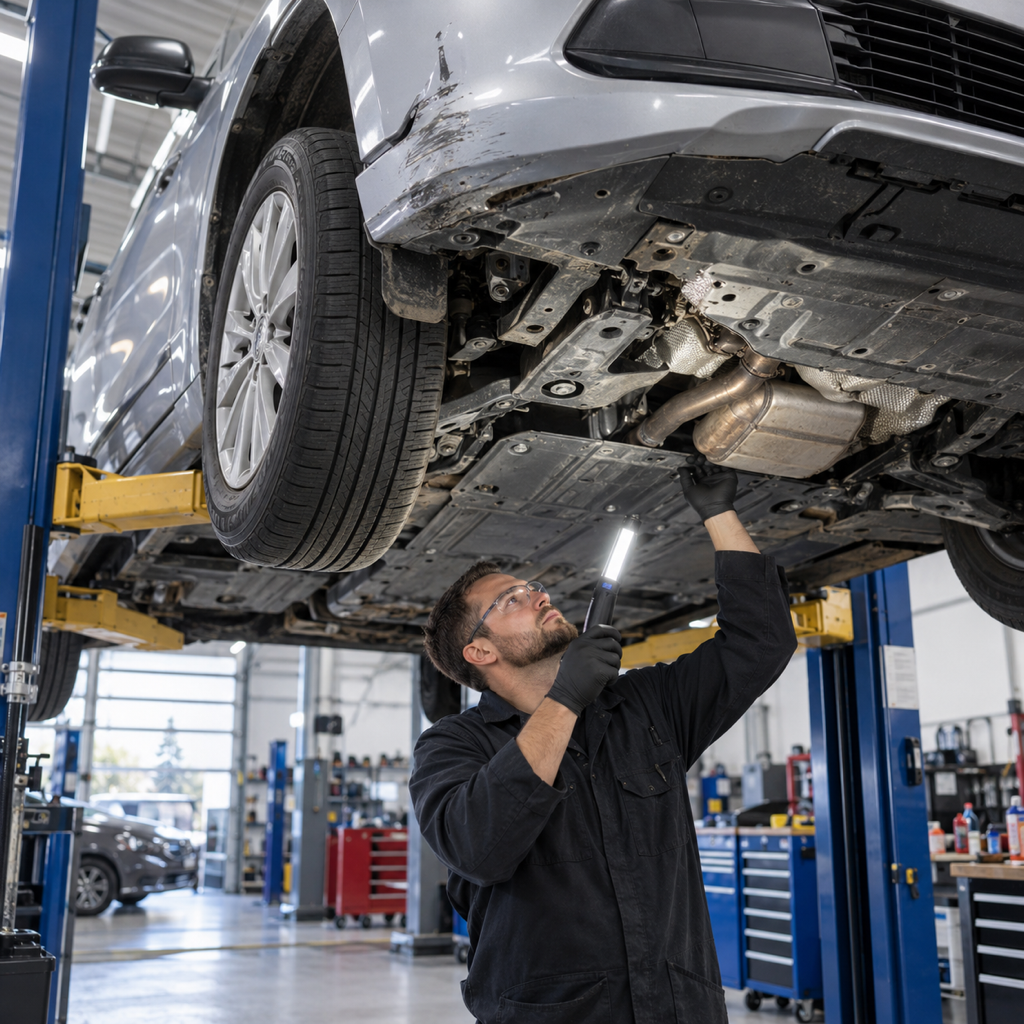
When people look at a vehicle after an accident, they usually inspect the areas that are easiest to see. They look at the hood, doors, bumpers, headlights, and fenders. What they often don't consider is the underside of the vehicle. The underbody contains numerous components that can be affected by an impact, including protective panels, exhaust components, suspension mounting areas, underbody shields, fuel-system components, and structural sections. Some damage underneath the vehicle may not be visible unless the vehicle is properly lifted and inspected. For drivers seeking auto body repair in Vancouver, WA, an underbody inspection can be an important part of understanding the full effects of a collision.
Why the Underbody Matters
The underside of a vehicle is exposed to road conditions every day. It encounters:
- Water
- Dirt
- Gravel
- Road salt and contaminants
- Potholes
- Road debris
Manufacturers use various shields, panels, brackets, and protective components to help protect systems underneath the vehicle. A collision can disturb these components even when the exterior bodywork looks relatively minor.
How an Accident Can Damage the Underbody
The type of damage depends heavily on where the vehicle was struck. A collision may affect:
- Underbody panels
- Exhaust components
- Mounting brackets
- Structural sections
- Suspension-related mounting areas
- Protective shields
An impact from underneath, a collision with a curb, or a vehicle striking a lower bumper area can all produce different types of damage.
Why Underbody Damage Is Difficult to Notice
Drivers generally don't have a clear view of the underside of their vehicle. Even when looking underneath while parked, many components remain hidden. A loose underbody panel, for example, may not cause an immediate warning light. Instead, the driver may eventually hear a rattling or scraping sound while driving. Similarly, a damaged protective panel may continue functioning until repeated road vibration causes it to loosen further.
Strange Sounds Can Be an Important Clue
After an accident, listen for sounds that weren't present before. These can include:
- Rattling underneath the vehicle
- Scraping sounds
- Vibrations at certain speeds
- A metallic buzzing
- A component contacting the road
A new sound doesn't automatically mean the collision caused underbody damage, but if it began immediately after the accident, it deserves attention.
The Exhaust System Can Be Affected
The exhaust system runs underneath the vehicle and is supported by various hangers and mounting points. An impact can potentially alter the position of these components. If something shifts, you may notice:
- New exhaust noise
- Rattling
- Vibration
- Changes in clearance underneath the vehicle
A professional inspection can determine whether the exhaust system has been affected.
Protective Underbody Panels Have a Purpose
Many vehicles have plastic, composite, or metal panels underneath the engine and other areas. These components may help protect the underside from road debris and environmental exposure. If a panel becomes cracked or loose after an accident, it may begin dragging or vibrating. Replacing or properly securing the damaged panel helps restore the vehicle's intended protection.
Why Water Exposure Matters
Vancouver, WA drivers regularly deal with wet roads and rainy weather. Underbody components are therefore exposed to moisture regularly. If a collision damages protective panels or coatings, additional exposure to water and road contaminants may affect the underlying components over time. This makes proper inspection and repair especially useful.
A Lifted Inspection Can Reveal What a Visual Check Cannot
One of the simplest reasons professional collision inspection matters is access. Technicians can safely raise the vehicle and examine areas that drivers cannot easily see. This allows them to inspect:
- Underbody panels
- Exhaust clearance
- Structural areas
- Mounting brackets
- Wheel and suspension areas
- Signs of impact underneath the vehicle
This can reveal damage that would otherwise remain hidden.
When Should You Have the Underbody Checked?
An underbody inspection is particularly important when:
- The vehicle hit a curb during the accident.
- The impact occurred near the lower bumper.
- A wheel struck another object.
- You hear new noises underneath.
- Something appears to be hanging below the vehicle.
- You notice fluid underneath the vehicle.
These signs don't necessarily identify the problem, but they justify a professional inspection.
Final Thoughts
The underside of your vehicle is easy to forget because it isn't part of your everyday view. After a collision, however, it can contain some of the most difficult-to-see damage. A complete collision inspection considers the vehicle from every angle, including underneath, helping technicians identify issues that might otherwise be overlooked. For Vancouver, WA drivers, this comprehensive approach can make the difference between repairing visible damage and properly addressing the full effects of a collision.
Have Hidden Underbody Damage Professionally Inspected
Contact Motolux Collision Center for a comprehensive lifted inspection after a collision.