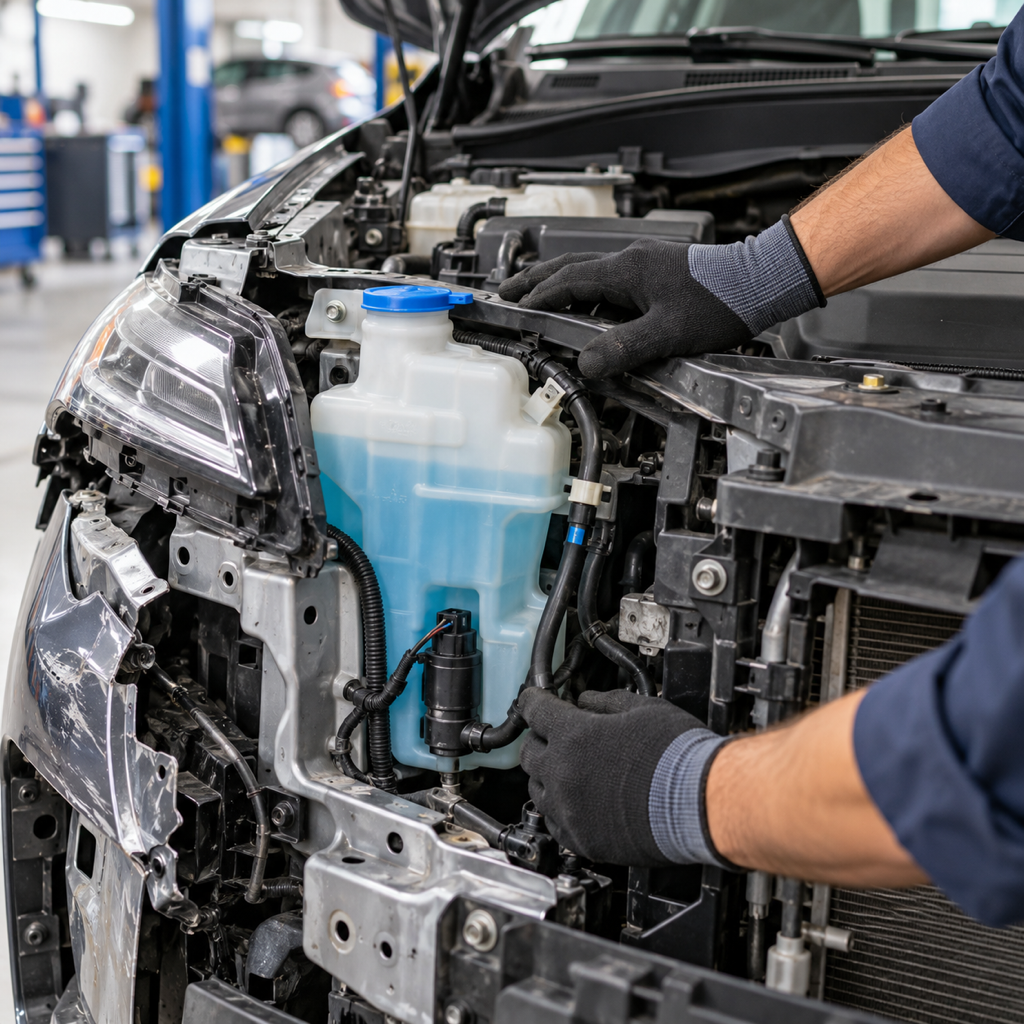
After a car accident, most drivers focus on the visible damage. A dented bumper, damaged hood, cracked headlight, or misaligned panel is easy to notice. However, some vehicle systems can be affected without producing obvious exterior signs.
The windshield washer system is one example.
This system helps drivers maintain visibility by delivering washer fluid to the windshield when needed. Although it may seem like a minor convenience feature, it plays an important role in keeping the glass clear of dirt, road grime, and other residue.
After a front-end collision, components such as washer-fluid reservoirs, pumps, hoses, connectors, and spray nozzles may need inspection, depending on the location and severity of the impact.
For drivers seeking collision repair in Vancouver, WA, understanding how this system works can help prevent small problems from being overlooked during the repair process.
What Does the Windshield Washer System Do?
A windshield washer system delivers cleaning fluid to the windshield through a network of components.
When the driver activates the washer control, an electric pump moves fluid from the reservoir through hoses to the spray nozzles. The nozzles distribute the fluid across the windshield, allowing the wipers to clear away dirt and residue.
Depending on the vehicle, the system may also supply fluid to the rear window or use heated nozzles and other specialized features.
The system typically includes:
- Washer-fluid reservoir
- Electric washer pump
- Fluid hoses and connecting lines
- Spray nozzles
- Electrical connectors
- Reservoir cap and mounting hardware
- Related control components
Because these components may be positioned in different areas of the vehicle, the appropriate inspection depends on the manufacturer's design and the location of the collision damage.
How a Collision Can Affect the Washer System
A front-end collision can affect more than exterior body panels.
Depending on the vehicle, the washer reservoir may be located behind a fender liner, near the front bumper, or within another area close to the impact zone. Hoses and electrical connections may also run through areas that are disturbed during collision repairs.
If an impact damages or displaces one of these components, the washer system may stop working correctly.
Possible problems include a cracked reservoir, a disconnected hose, a damaged pump, a loose electrical connector, or a blocked or displaced spray nozzle.
Not every front-end collision causes these problems. However, if the damage involves the areas where washer-system components are located, inspection may be appropriate.
Why a Washer-Fluid Leak Should Not Be Ignored
One of the most noticeable symptoms is washer fluid leaking from the vehicle.
A driver may notice a puddle after filling the reservoir or discover that the fluid level drops unusually quickly.
Although some leaks may be relatively simple to address, the source should be identified before assuming that the problem is minor.
A leak can originate from the reservoir, pump seal, hose, connector, or another part of the system.
After a collision, the timing of the leak is particularly relevant. If the system worked normally before the accident and began leaking afterward, the damaged area should be considered during the inspection.
It is also important to distinguish washer fluid from other automotive fluids, since a puddle beneath the vehicle can have several possible causes.
What If the Washer Pump Makes Noise but No Fluid Comes Out?
Another possible symptom is a washer pump that can be heard operating without fluid reaching the windshield.
This can happen for several reasons.
The reservoir may be empty, a hose may have disconnected, a line may be obstructed, or the pump may not be delivering fluid correctly. The spray nozzles may also be blocked or displaced.
If the issue started after a collision, technicians can inspect the system to determine whether damage, disconnection, or another fault is responsible.
Repeatedly activating the washer control without understanding the problem may not help. If the reservoir is empty or the system is damaged, the underlying issue needs attention first.
Why Spray Nozzles Matter
Washer nozzles are designed to direct fluid onto the windshield.
If a nozzle becomes displaced, damaged, or obstructed, the fluid may spray in the wrong direction or fail to reach the intended area.
A driver might notice that fluid lands near the edge of the windshield rather than where it is needed.
Although nozzle problems can develop through ordinary use, they should also be checked when the collision or repair work affected the surrounding components.
Correct positioning matters because the system needs to distribute fluid effectively across the relevant area of glass.
Could a Damaged Hose Cause an Intermittent Problem?
Yes, depending on the nature of the fault.
A hose that has become disconnected or damaged may allow fluid to escape before it reaches the spray nozzles. The driver may hear the pump running but see little or no fluid on the windshield.
A leak may also be difficult to notice if fluid escapes into a concealed area or only becomes apparent when the system is operated.
The repair process should identify the location of the fault rather than replacing components without confirming the cause.
The Connection Between Washer System Inspection and Collision Repair
Collision repair involves examining the areas affected by an impact and determining what needs to be repaired or replaced.
If a damaged bumper, fender, or related panel must be removed, technicians may encounter components positioned behind that area.
Depending on the vehicle, these may include washer-system components and their supporting hardware.
The goal is to evaluate the actual condition of the system and ensure that components affected by the collision or repair process receive appropriate attention.
Why Visibility Matters in Vancouver, WA
Drivers in Vancouver, Washington, encounter wet weather, road spray, and changing seasonal conditions.
When the windshield becomes dirty, a functioning washer system helps the driver clear residue before it interferes with visibility.
A system that works inconsistently may become particularly inconvenient during longer journeys or when road grime accumulates.
If your vehicle's washer system has stopped working after an accident, it is worth having the problem evaluated instead of waiting until the next time the windshield needs cleaning.
What Drivers Should Check After an Accident
After a collision, pay attention to changes in normal washer-system operation.
You may notice:
- Washer fluid disappearing unusually quickly
- Fluid leaking beneath the vehicle
- The pump operating without fluid reaching the windshield
- Spray directed away from the glass
- Only one nozzle working
- No response when the washer control is activated
These symptoms can have causes unrelated to the collision. However, if they began after the accident, tell your repair facility when the problem started and which functions are affected.
Avoid working around damaged electrical components or dismantling parts of the vehicle without appropriate knowledge and procedures.
How Motolux Collision Center Can Help
Motolux Collision Center serves drivers looking for collision repair in Vancouver, WA.
When a collision affects the front end of a vehicle, the inspection should account for the actual damaged areas and any related components that may have been affected.
If the washer system is not functioning normally after an accident, the repair team can determine whether the problem requires additional inspection or diagnosis. The appropriate repair will depend on the vehicle's construction and the fault identified.
Final Thoughts
The windshield washer system may not be the first component drivers think about after a collision, but it is part of the vehicle's everyday visibility equipment.
A cracked reservoir, damaged hose, disconnected line, or displaced nozzle can prevent the system from working as intended. These issues may be less visible than exterior damage, making them easy to overlook.
If your windshield washer system begins leaking, stops spraying, or behaves differently after an accident, report the change during your collision repair assessment.
For drivers in Vancouver, WA, a careful inspection of the affected areas can help identify problems that are not immediately obvious from the outside.