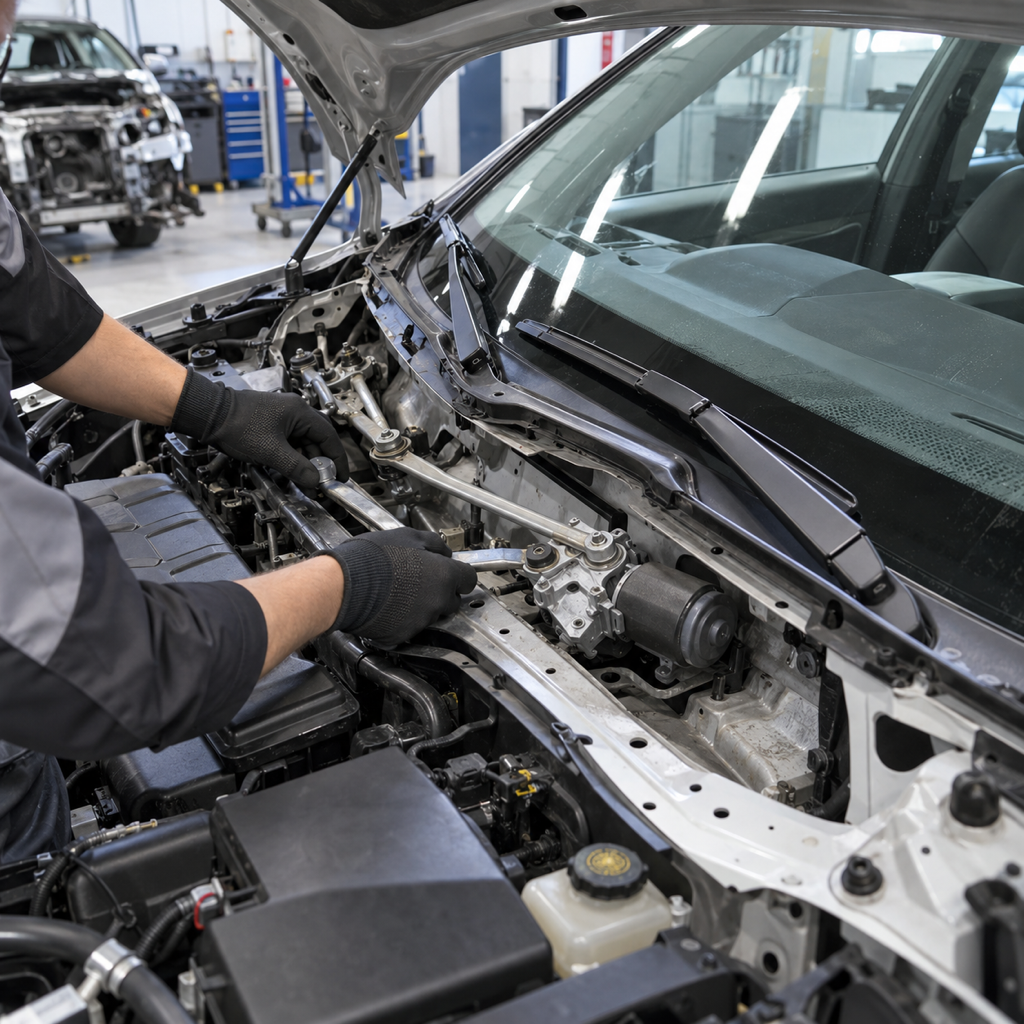
A front-end collision can damage far more than the bumper, hood, headlights, and other components that are immediately visible. One area that is often overlooked is the windshield wiper system.
Windshield wipers are essential for maintaining visibility during rain, snow, road spray, and other poor-weather conditions. The system may appear simple from the outside, but it relies on several mechanical and electrical components working together.
After a collision, damage to the wiper arms, linkage, motor, mounting points, or related components may not always be immediately obvious.
For drivers searching for collision repair in Vancouver, WA, understanding this overlooked area can help explain why a thorough post-collision inspection should include functional systems as well as exterior body damage.
Why Windshield Wipers Matter After a Collision
Windshield wipers are directly connected to driver visibility.
A vehicle can look completely repaired from the outside while still having a problem with the wiper system. If the wipers do not move correctly, stop unexpectedly, operate unevenly, or fail to return to their normal position, the problem can become particularly noticeable when the vehicle is driven in wet weather.
A collision repair inspection should therefore consider whether the wiper system is functioning normally when the front portion of the vehicle has been impacted.
What Components Make Up the Wiper System?
Although the system looks simple from the driver's seat, several components work together.
Depending on the vehicle, the system can include:
- Wiper arms
- Wiper blades
- Wiper motor
- Wiper linkage
- Pivot mechanisms
- Electrical wiring
- Connectors
- Mounting brackets
- Washer fluid components
- Control switches
The exact configuration varies by vehicle.
A collision does not have to visibly break one of these components for its operation to change. A mounting point can shift, a linkage can become displaced, or an electrical connection can be affected.
How a Front-End Collision Can Affect the Wipers
The wiper system is positioned close to the windshield and upper portion of the front body structure.
Depending on the design of the vehicle, components may be located beneath trim and panels near the base of the windshield.
A collision that affects the hood, cowl area, upper front structure, or surrounding components can potentially affect the wiper system.
This is particularly important when the impact is significant enough to move surrounding panels or components.
A Wiper That Works Can Still Have a Problem
One of the easiest mistakes is to test the wipers once and assume everything is fine.
A wiper system may continue operating even when a component has been affected.
For example, a wiper arm may move but operate with an unusual range of motion. The system may also produce an unfamiliar sound or move differently from the opposite side.
These changes are worth documenting.
Warning Signs to Watch For
After a collision, vehicle owners should pay attention to changes such as:
- Wipers moving slower than before
- Uneven movement between the wiper arms
- Wipers stopping in an unusual position
- Wipers failing to return to their normal resting position
- Unusual clicking or mechanical sounds
- One wiper moving differently from the other
- Wipers contacting areas they did not contact before
- Washer spray behaving differently
- Wipers failing intermittently
None of these symptoms automatically proves collision damage. However, when they appear after an accident, they should be mentioned during the repair inspection.
Why Wiper Linkage Deserves Attention
The linkage transfers movement from the wiper motor to the wiper arms.
If the linkage is bent, displaced, or damaged, the motor may still operate while the wipers move incorrectly.
This can create a confusing situation for a vehicle owner.
The driver may hear the motor running and assume the system is functioning normally. However, the actual movement of the wiper arms may tell a different story.
A collision repair technician can inspect the system to determine whether the components are operating as intended.
Wiper Arms Can Also Be Affected
Wiper arms are exposed components.
An impact involving the front of the vehicle or debris can potentially bend or displace an arm.
Even a small change in position can affect how the blade contacts the windshield.
If the blade no longer sits correctly against the glass, wiping performance may change.
This is especially important in rainy conditions when consistent windshield coverage is needed.
The Washer System Should Not Be Forgotten
The windshield washer system may also deserve attention depending on where the collision occurred.
A vehicle's washer system can include fluid lines, nozzles, a pump, and a reservoir.
If front-end components were damaged or replaced during the repair, technicians may need to verify that the washer system is operating correctly.
Again, the exact inspection depends on the vehicle and the location of the damage.
Why This Matters in Vancouver, WA
Vancouver drivers regularly encounter wet weather conditions.
That makes windshield visibility particularly important.
A vehicle owner may not notice a minor wiper issue during a dry-weather test drive. The problem can become much more obvious when rain begins.
This is one reason functional testing should not be limited to the appearance of the repaired vehicle.
How a Collision Repair Shop Evaluates the System
The inspection process depends on the vehicle and collision.
Technicians may evaluate the physical condition of the wiper arms and surrounding components, operate the system through its normal settings, and inspect areas affected by the collision.
If a problem is discovered, the technician can determine whether it is related to collision damage or another vehicle issue.
Manufacturer-specific repair information may also be relevant when components require replacement or adjustment.
Why Vehicle Owners Should Report Small Changes
Customers often notice changes before they become obvious during a quick inspection.
If you notice that your wipers sound different, move differently, or stop in a different position after an accident, tell your repair facility.
Small observations can help technicians investigate areas that may otherwise receive less attention.
Motolux Collision Center in Vancouver, WA
At Motolux Collision Center, the objective of collision repair is not simply to improve the vehicle's appearance.
Modern vehicles contain interconnected mechanical and electrical systems, and functional concerns can be just as important as visible body damage.
When front-end damage occurs, the appropriate inspection can include components surrounding the damaged area and systems whose operation may have changed because of the collision.
Collision Repair Should Restore Function as Well as Appearance
A properly repaired vehicle should not simply look better.
The systems affected by the collision should also be evaluated according to the vehicle's condition and repair requirements.
Windshield wipers are a good example of a small system that can have a major effect on everyday driving.
If your wipers behave differently after a front-end accident, do not ignore the change simply because the vehicle's bodywork looks repaired.
Mention the symptom to your collision repair technician and have the system evaluated.