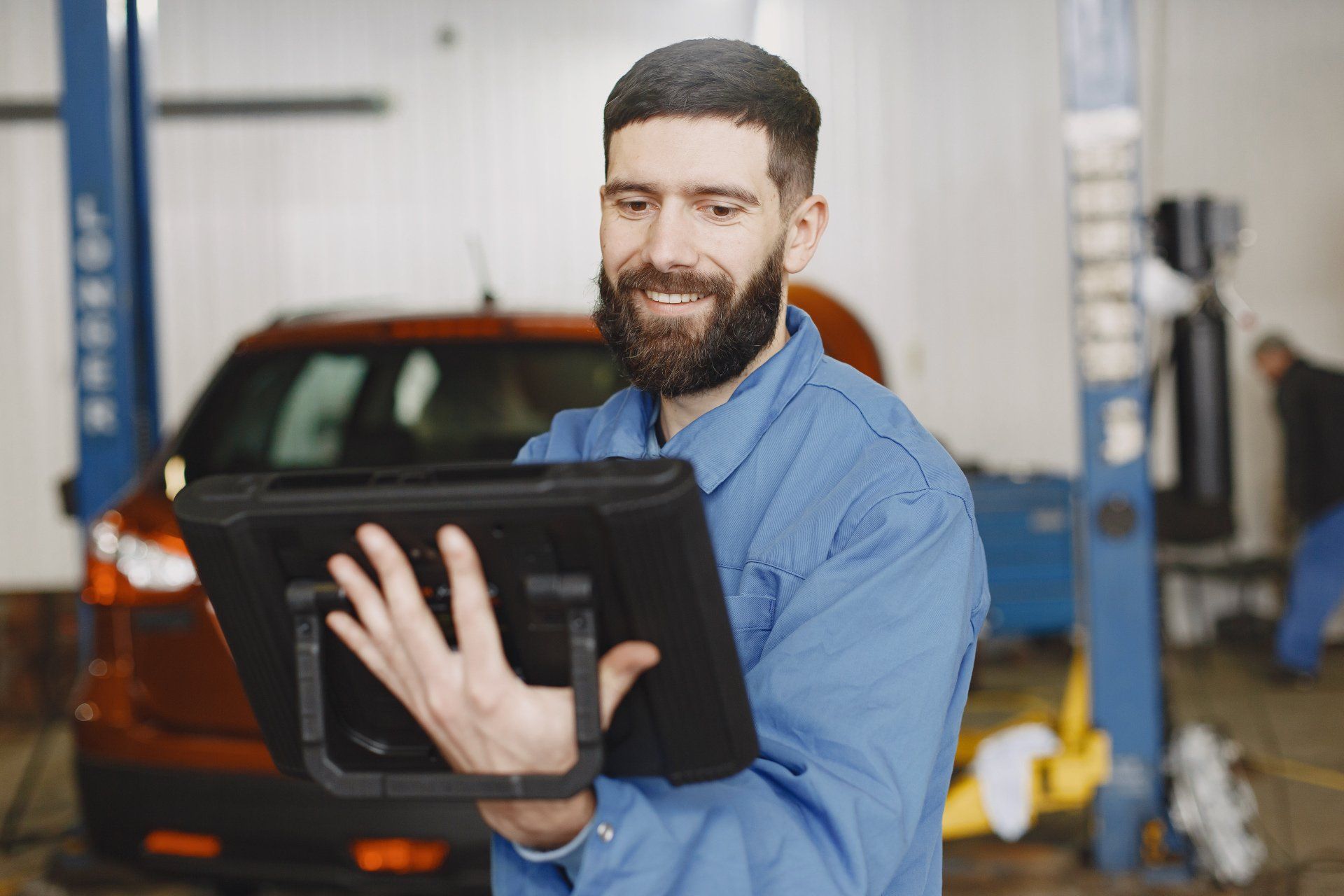
Location: Vancouver, Washington Service category: Collision repair and driver-assistance system inspection Case type: Representative collision repair scenario Business: Motolux Collision Center
Editorial note: This is an illustrative case study based on a representative repair scenario. It is not a verified Motolux customer record, and it does not describe a confirmed individual repair performed by the business. The scenario demonstrates how a collision repair provider may evaluate driver-assistance camera requirements following front-end damage.
1. Overview
Modern vehicles increasingly combine traditional body components with cameras, radar sensors, and electronic systems designed to support driver awareness. These systems may help identify vehicles ahead, provide collision warnings, or support automatic emergency braking.
When a vehicle sustains front-end damage, the repair process may involve components located near or connected to these systems. Depending on the vehicle's design, a repair can require more than replacing damaged exterior panels and restoring the paint finish.
This representative case study follows a vehicle brought to an auto body shop in Vancouver, WA, after a front-end collision. The visible damage was concentrated around the front of the vehicle. During the repair-planning process, the team identified a need to determine whether the vehicle's forward-facing driver-assistance camera required inspection or calibration under the manufacturer's procedures.
The central challenge was not to assume that the camera was defective, but to establish which checks were necessary and ensure that any required work was addressed before the repair process was considered complete.
2. The Initial Situation
Imagine a modern passenger vehicle involved in a low-speed front-end collision. The impact damages exterior components around the front of the vehicle, requiring a body repair assessment.
The owner is primarily concerned with the visible damage. The vehicle still starts, the dashboard does not display an obvious persistent camera warning, and the owner expects the repair to involve the damaged exterior components.
These observations are understandable, but they do not establish whether every system associated with the affected area remains within the manufacturer's specifications.
On some vehicles, a forward-facing camera is mounted near the windshield or rearview mirror. Other vehicles use radar sensors behind the grille or within other front-end components. The exact configuration depends on the make, model, trim, and installed options.
If the collision affects a component associated with one of these systems, the repair provider must determine whether the damage or planned repair triggers an inspection, diagnostic procedure, calibration, or another manufacturer-required step.
In this representative scenario, the repair team flags the forward-facing driver-assistance camera requirements for review before finalizing the repair plan.
3. The Main Challenge: Visible Damage Does Not Define the Entire Repair Scope
A vehicle can look substantially repaired while certain checks remain outstanding. This is particularly relevant when electronic safety features rely on components that may be removed, replaced, repositioned, or disturbed during body repairs.
The challenge in this scenario is to answer several practical questions:
- Is the vehicle equipped with a forward-facing camera or other driver-assistance sensors?
- Did the collision affect any components associated with those systems?
- Does the manufacturer's service information require inspection or calibration for the damage and repair operations involved?
- Is diagnostic scanning appropriate?
- If calibration is required, what method and equipment are specified?
- Who is equipped to perform the required procedure and document the outcome?
These questions cannot be answered reliably through appearance alone. They require an assessment of the vehicle, the actual damage, the planned repair operations, and the applicable service information.
The absence of a dashboard warning is useful information, but it should not be treated as independent proof that calibration is unnecessary.
4. Step One: Identify the Vehicle's Safety Technology
The first step is to establish which driver-assistance features are installed.
A vehicle may include Forward Collision Warning, Automatic Emergency Braking, adaptive cruise control, lane-related assistance, or other features. These functions may use different sensors and may have different inspection requirements.
Not every vehicle has the same equipment. Even vehicles from the same manufacturer can have different sensor arrangements depending on their model year, trim, and optional features.
In the representative scenario, the repair team identifies the vehicle's relevant equipment and consults the appropriate manufacturer information.
This step matters because the name of a feature does not necessarily identify the complete hardware configuration. A camera may support more than one function, while another function may rely on radar or multiple sensors.
The goal is to understand the actual system rather than assume that every vehicle uses the same technology.
5. Step Two: Review the Collision Damage and Planned Repairs
After identifying the relevant equipment, the next step is to compare the damaged areas and planned repairs with the manufacturer's service requirements.
For example, a repair involving a sensor mounting point may have different implications from a repair involving an unrelated exterior component. Removing or replacing a part that supports a sensor can also create requirements that differ from those associated with repairing a nearby panel.
The correct assessment considers the relationship between the damage, the components involved, and the vehicle's specified procedures.
In this scenario, the team reviews the front-end damage and determines whether the planned repair operations affect any camera-related components or mounting locations.
The purpose is to avoid two opposite mistakes: overlooking a required procedure or performing unnecessary work without a manufacturer-based reason.
A calibration should not be ordered solely because the vehicle was involved in a collision. Equally, it should not be dismissed simply because the impact appeared minor.
6. Step Three: Determine Whether Diagnostic Scanning Is Necessary
Vehicle diagnostic equipment can help identify certain faults or system conditions. Depending on the vehicle and repair, a scan may be part of the assessment before or after the work.
A diagnostic scan can provide information about recorded trouble codes and system status. However, its results must be interpreted in context.
A scan showing no relevant fault does not automatically prove that a sensor's physical position is correct or that a required calibration procedure can be skipped. Similarly, the presence of a code does not by itself establish the precise cause of the problem.
In this illustrative scenario, the repair plan accounts for the manufacturer's diagnostic requirements, including whether a scan is needed and how its results should be interpreted.
This distinction is important because diagnostic scanning and sensor calibration serve different purposes. Scanning evaluates available system information; calibration establishes sensor alignment or operating references according to the applicable procedure.
Some repairs require one, both, or neither. The vehicle-specific requirements determine the appropriate process.
7. Step Four: Confirm Whether Camera Calibration Is Required
After reviewing the damage and the relevant service information, the team determines whether the vehicle requires a calibration procedure.
Depending on the manufacturer's instructions, calibration may be static, dynamic, or a combination of methods.
Static calibration generally involves specialized targets or equipment positioned according to the vehicle-specific procedure in a suitable workshop environment.
Dynamic calibration generally involves operating the vehicle under prescribed conditions so that the system can complete its required calibration process.
These are broad descriptions, not interchangeable instructions. The precise procedure may depend on the vehicle's camera design, software, sensor arrangement, equipment, and service requirements.
In the representative case, the repair plan identifies whether calibration is required and establishes who will complete it. If the repair facility does not have the necessary equipment or capability, the work may need to be coordinated with a suitably equipped specialist.
It would be inappropriate to assume that a generic camera calibration procedure is sufficient for every vehicle.
8. Step Five: Complete the Required Procedure and Verify the Result
When calibration is required, the appropriate procedure should be completed in accordance with the manufacturer's specifications.
This may involve preparing the vehicle, confirming required conditions, using specified equipment, performing the calibration sequence, and checking the resulting system status. Additional steps may be required for certain vehicles.
Where relevant, the repair process should also include any prescribed post-repair diagnostic checks and documentation.
The aim is to establish that the required procedure has been completed, not merely that a dashboard message has disappeared.
If calibration cannot be completed successfully, the issue should be investigated rather than treating the process as finished. The cause could relate to the procedure, equipment, component condition, vehicle setup, or another factor. The actual cause must be established through appropriate diagnosis.
In this illustrative scenario, the repair cannot be considered complete from an ADAS perspective until the applicable inspection and calibration requirements have been resolved.
No specific calibration result is claimed for a real customer vehicle because this case study is illustrative.
9. Step Six: Communicate the Repair Scope Clearly
A repair plan should help the vehicle owner understand why certain steps may be necessary.
A driver who expects only exterior bodywork may be unfamiliar with the requirements associated with modern safety technology. Clear communication can explain why the vehicle's equipment was identified, why manufacturer information was reviewed, and why diagnostic or calibration work may be relevant.
A useful explanation should distinguish between:
- Work that is definitely required based on the assessment.
- Checks that are being performed to determine whether additional work is necessary.
- Procedures that may need to be completed by a specialist.
- Work that is not required for the specific vehicle or repair.
This approach avoids promising unnecessary services while helping ensure that applicable requirements are not overlooked.
It also gives the owner a clearer understanding of the repair process and the basis for any additional inspection or calibration.
10. Why This Matters for Drivers in Vancouver, WA
Drivers in Vancouver, Washington, use vehicles with a wide range of safety features, from conventional systems to more advanced camera- and radar-based technology.
As these features become more common, collision repair planning increasingly requires attention to the systems associated with damaged components.
A front-end collision does not automatically mean a camera has been damaged or that calibration is always required. However, if the collision or repair work falls within the manufacturer's specified conditions for inspection or calibration, those requirements should be addressed.
For anyone searching for an auto body shop in Vancouver, WA, this is a useful question to raise when discussing damage involving the front of the vehicle.
Ask the repair provider how the applicable service requirements will be identified, whether a calibration may be necessary, and how any required specialist work will be coordinated.
Motolux Collision Center can be contacted to discuss collision damage and the assessment process for your vehicle. The appropriate inspection, repair, and calibration arrangements depend on the vehicle and the work required.
11. Key Lessons from the Case Study
This representative scenario highlights several lessons for collision repair planning.
Visible damage is only one part of the assessment. The repair scope should account for relevant components and systems affected by the collision or the repair operations.
Vehicle-specific information matters. Camera locations, sensor arrangements, and calibration procedures vary. A generic checklist cannot replace the manufacturer's requirements.
A warning-free dashboard does not settle every question. Warning messages and diagnostic results are useful, but they must be considered alongside the applicable repair procedures.
Scanning and calibration are different operations. A scan may help identify system conditions, while calibration addresses sensor alignment or reference settings where required.
Specialist coordination may be appropriate. A repair facility should identify whether it has the required equipment and capability or whether a qualified specialist needs to complete the procedure.
Documentation supports clear communication. Recording the inspections and procedures required for a repair can help establish what was completed and identify any outstanding items.
These principles apply beyond this illustrative scenario. They support a consistent, vehicle-specific approach to collision repair whenever driver-assistance technology may be affected.
12. Conclusion
Modern collision repair involves more than restoring the appearance of damaged body panels. Depending on the vehicle and the damage, the repair process may also require attention to cameras, radar sensors, mounting components, diagnostic systems, and calibration procedures.
This representative case study demonstrates how a front-end collision can prompt a review of forward-facing camera requirements. The correct response is not to assume that every collision requires calibration, but to assess the vehicle, consult the manufacturer's instructions, and complete the procedures that apply.
For drivers in Vancouver, WA, asking about driver-assistance system requirements can help clarify the full repair scope. A repair plan grounded in the vehicle's actual needs is more useful than relying on assumptions based solely on visible damage.