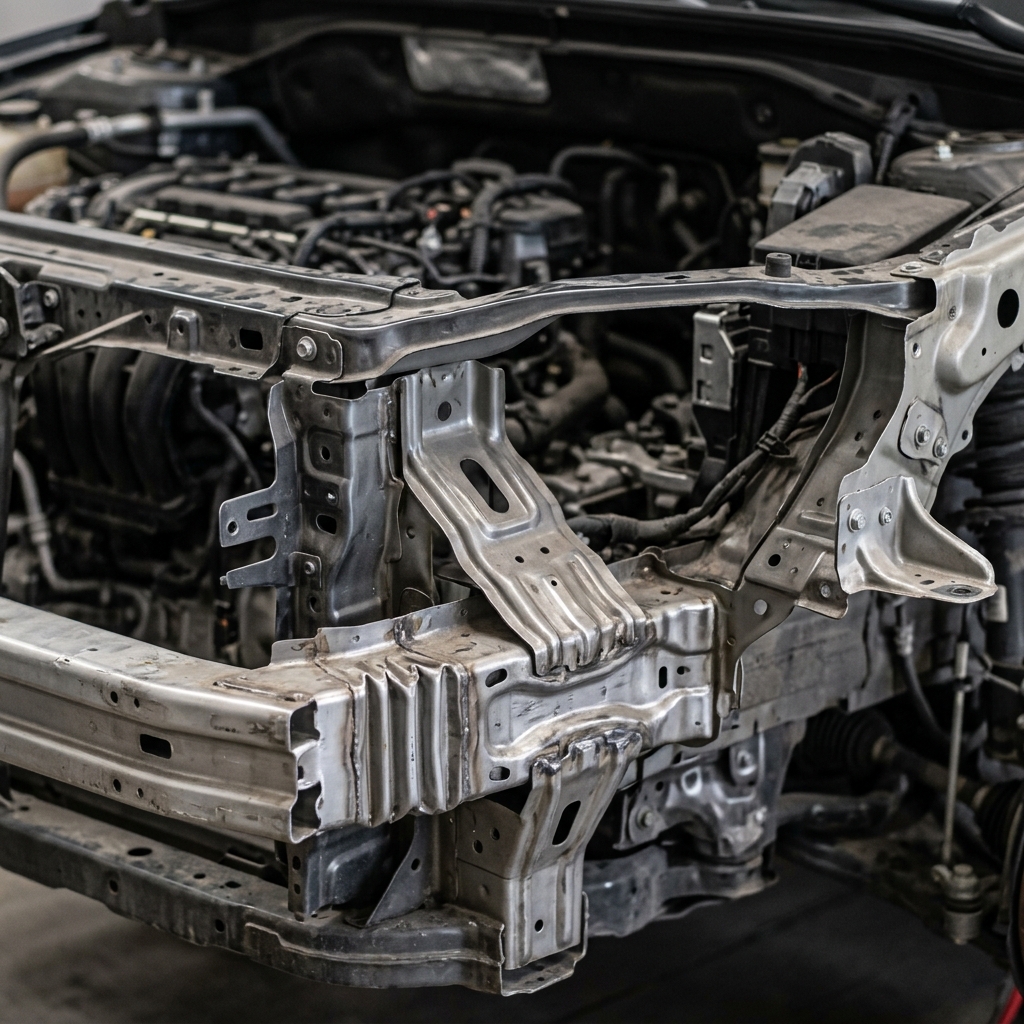
Location: Vancouver, Washington Service Focus: Collision Damage Assessment and Mounting Component Inspection Vehicle System: Engine and Transmission Mounting Assembly Case Type: Representative Collision Repair Scenario
Editorial note: This is an illustrative case study created to explain a possible collision repair scenario. It does not represent a verified Motolux customer, documented vehicle repair, or confirmed repair outcome.
Introduction
When a vehicle is involved in a collision, the most noticeable damage is usually found on the exterior. Damaged panels, a distorted front section, broken lights, and paint damage often receive immediate attention.
However, the force of an impact can also affect components located within the engine compartment.
One area that may require additional inspection is the engine and transmission mounting system.
Engine and transmission mounts help support the powertrain and control its movement relative to the vehicle body. Depending on the vehicle design, they may contain rubber, hydraulic, or other specialized damping materials.
If a collision affects a mounting bracket, attachment point, or mount assembly, the powertrain may no longer be supported in its intended position.
This representative scenario explains how collision-related mounting damage may be identified and why a thorough assessment matters.
1. The Collision Scenario
In this illustrative case, a modern passenger vehicle experiences a front-quarter collision during an urban driving situation.
The impact damages exterior body components near the front of the vehicle. The initial visible concerns include damage to the front bodywork and nearby components within the engine compartment.
After the accident, the vehicle owner notices that something feels different during normal operation.
The owner reports unfamiliar movement and a change in the way the vehicle behaves when transitioning between acceleration and deceleration.
These observations do not automatically confirm engine or transmission mount damage. Similar symptoms can have several possible causes.
However, because the symptoms appeared after the collision, the repair assessment should consider whether the impact affected the powertrain mounting assembly.
2. Why Engine and Transmission Mounts Matter
The engine and transmission are among the heaviest major assemblies in a vehicle.
They must remain correctly supported while the vehicle accelerates, brakes, changes direction, and travels over uneven surfaces.
Mounting systems serve several purposes:
- Support the weight of the engine and transmission.
- Maintain the intended powertrain position.
- Control movement during normal vehicle operation.
- Reduce the transfer of engine vibration into the vehicle body.
- Maintain suitable alignment between connected components.
Mount designs vary by vehicle. Some use conventional rubber mounts, while others use hydraulic or electronically controlled systems.
The correct mounting arrangement is determined by the vehicle manufacturer.
A damaged mount or bracket can affect more than comfort. It may also influence the position of connected components and place additional stress on nearby connections.
3. Initial Inspection and Damage Assessment
The first stage of the representative repair process is a review of the collision damage.
Rather than focusing only on the visible exterior panels, the assessment considers the affected front body area and nearby engine compartment components.
The inspection may include:
Visible mount condition: Checking accessible engine and transmission mounts for cracks, separation, deformation, or other visible damage.
Mounting brackets: Evaluating brackets and attachment points for bending, displacement, or signs of impact.
Fasteners and connections: Checking relevant mounting hardware for damage or changes in position.
Powertrain position: Comparing the observed position with the vehicle manufacturer's specifications and repair information.
Nearby components: Considering whether the movement of the powertrain could have affected connected hoses, wiring, brackets, or other nearby components.
The inspection must be appropriate to the specific vehicle. Some mounting components may be difficult to assess without access procedures or specialist equipment.
4. Understanding the Symptoms
During the assessment, the owner’s reported symptoms become an important part of the diagnostic process.
Unusual Movement During Acceleration
If a mounting component is damaged, the engine or transmission may move more than intended under certain operating conditions.
The exact movement depends on the mount design and the nature of the damage.
Changes During Gear Selection
Some vehicles may exhibit unusual movement or impact-like sensations when shifting between drive and reverse.
These symptoms can also be related to transmission or drivetrain issues, so they should not be attributed to a mount without further diagnosis.
Increased Vibration
Mounts are designed to help control the transfer of powertrain vibration into the vehicle body. A damaged mount may allow more vibration to be felt inside the cabin.
However, vibration can have many other causes, including engine operation, exhaust contact, drivetrain components, and other mechanical issues.
Unfamiliar Sounds
A damaged or displaced mounting assembly may allow components to contact surrounding parts under certain conditions.
Unusual sounds should be evaluated alongside the vehicle's other symptoms and the collision damage.
5. Identifying the Possible Collision-Related Damage
In this representative scenario, the inspection identifies a mounting assembly that requires closer evaluation.
The important distinction is between ordinary wear and collision-related damage.
A mount can deteriorate over time because of age, heat, fluid exposure, or normal use. An accident can also damage a mount or its supporting bracket through impact forces or displacement of nearby structures.
A proper assessment considers:
- Whether the component shows signs of fresh impact or deformation.
- Whether the mounting bracket or attachment location has shifted.
- Whether surrounding components show related collision damage.
- Whether the observed condition is consistent with the vehicle's reported accident.
- Whether the manufacturer provides specific inspection or replacement instructions.
This approach helps avoid replacing parts based only on symptoms.
6. Repair Planning and Manufacturer Procedures
Once a mounting issue is identified, the next step is to establish the appropriate repair plan.
The correct procedure depends on the vehicle model, powertrain layout, mount design, and extent of the damage.
Potential repair considerations may include:
- Replacement of a damaged engine or transmission mount.
- Replacement of a bent or damaged mounting bracket.
- Evaluation of the mounting points on the vehicle structure.
- Inspection of nearby components for secondary damage.
- Verification of correct powertrain positioning.
- Completion of any manufacturer-required inspections or procedures.
If structural damage has affected the mounting location, replacing the mount alone may not resolve the underlying problem.
The mounting area itself must be assessed and repaired according to applicable manufacturer procedures.
7. Why Replacing Only the Damaged Mount May Not Be Enough
A mounting assembly works as part of a larger system.
For example, if a mounting bracket has been distorted, installing a new mount without addressing the bracket may leave the powertrain incorrectly positioned.
Similarly, if an attachment point has been affected, the repair may require additional body or structural assessment.
This is why the inspection should consider the complete mounting arrangement rather than treating the mount as an isolated part.
A reliable repair plan should account for the condition of the mount, bracket, fasteners, attachment location, and surrounding components.
8. Final Verification
After repairs are completed, the relevant components should be checked according to the vehicle manufacturer's requirements.
Depending on the repair, verification may include:
- Confirming correct component installation.
- Checking mounting hardware and specified tightening procedures.
- Verifying powertrain positioning.
- Inspecting nearby components for contact or interference.
- Completing applicable diagnostic checks.
- Evaluating reported symptoms through appropriate testing.
A road test may be appropriate when the vehicle is safe to operate and the manufacturer's repair procedures allow it.
The purpose is to confirm that the repair has addressed the identified concern, not simply to verify that the exterior damage has been corrected.
9. What Vehicle Owners Can Learn From This Scenario
This scenario highlights an important aspect of collision repair: not all damage is visible from outside the vehicle.
A collision can affect components within the engine compartment, including mounting brackets and assemblies that support the powertrain.
Vehicle owners should mention any new symptoms that appear after an accident, even if those symptoms seem unrelated to the visible damage.
Useful information to share during an inspection includes:
- Whether vibration changed after the accident.
- Whether unfamiliar movement occurs during acceleration.
- Whether new sounds appeared.
- Whether the symptoms occur during gear selection.
- Whether the vehicle behaves differently than it did before the collision.
This information can help the repair team determine which areas may require additional evaluation.
10. The Importance of a Thorough Collision Assessment in Vancouver, WA
For drivers in Vancouver, WA, choosing a collision repair facility involves more than evaluating how damaged panels will be restored.
A collision assessment should consider the affected areas of the vehicle and identify components that may have been damaged by the impact.
Engine and transmission mounts are one example of components that may deserve attention when an accident affects the front body or engine compartment.
Motolux Collision Center can help vehicle owners discuss their collision damage and determine the appropriate assessment and repair requirements.
Where the inspection identifies mechanical or powertrain concerns requiring specialized diagnosis, coordination with a qualified mechanical specialist may be necessary.
Frequently Asked Questions
1. Can a front-end collision damage engine mounts?
Yes. Depending on the impact direction and severity, a collision may affect engine mounts, transmission mounts, brackets, or their attachment locations.
2. How can I tell if an engine mount is damaged after an accident?
Possible symptoms include increased vibration, unusual powertrain movement, unfamiliar sounds, or changes during acceleration. These symptoms have multiple possible causes and require proper diagnosis.
3. Can a damaged transmission mount affect driving?
A damaged transmission mount may affect powertrain positioning and movement. The vehicle should be evaluated to determine the extent of the damage and whether it is safe to operate.
4. Does every collision require engine mount replacement?
No. Replacement depends on the actual condition of the mount and related components. A collision alone does not establish that a mount is damaged.
5. Can a damaged mounting bracket be repaired?
The appropriate action depends on the bracket design, material, damage, and manufacturer repair instructions. Some components require replacement rather than straightening or modification.
6. Should I report new vibration after a collision?
Yes. Any new vibration, unusual movement, or unfamiliar sound should be mentioned during the post-collision assessment.
Conclusion
Engine and transmission mounts play an important role in supporting the vehicle's powertrain and controlling its movement.
Although they are not usually the first components drivers think about after an accident, they may require inspection when collision forces affect the front body or engine compartment.
A thorough assessment considers the mounts, brackets, attachment locations, and nearby components together. This helps identify the actual cause of post-collision symptoms and supports a repair plan based on the vehicle manufacturer's requirements.
If your vehicle has developed unusual vibration or movement after an accident, contact Motolux Collision Center in Vancouver, WA, to discuss the collision damage and appropriate next steps.