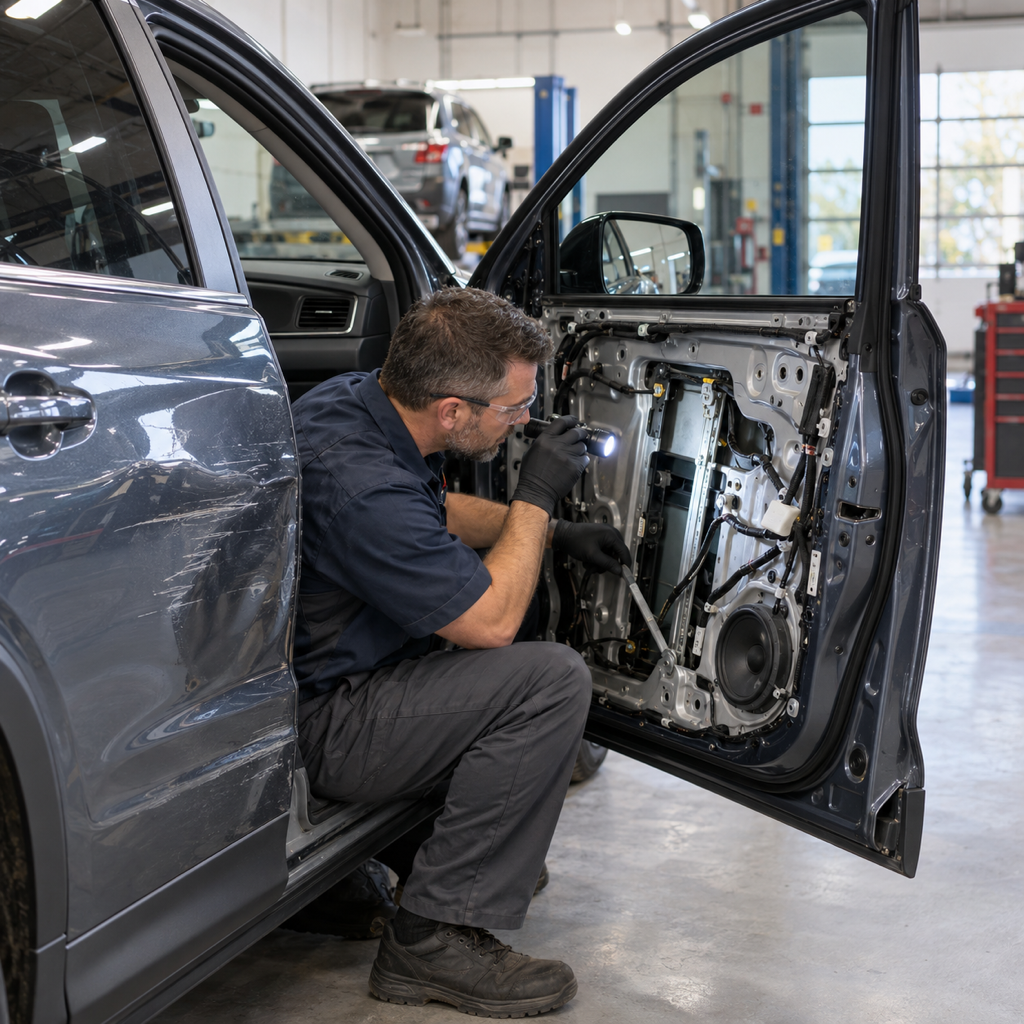
A Vancouver, WA customer brought their vehicle to Motolux Collision Center after another vehicle struck the passenger side during a low-speed traffic incident.
The visible damage appeared limited to the passenger-side front door.
There was a noticeable dent across the lower section of the door, several scratches in the paint, and minor damage near the door trim.
The door still opened and closed, and the power window continued to operate normally.
Because everything appeared functional, the customer initially expected a relatively straightforward body repair.
Initial Inspection
The Motolux team began with a detailed inspection of the affected door and surrounding panels.
Rather than evaluating only the outer surface, technicians examined the door's internal components and mounting areas.
The goal was to determine whether the impact had affected anything behind the visible panel.
Once the damaged trim was carefully removed, the team discovered that the collision had transferred force deeper into the door assembly.
Hidden Damage Behind the Exterior Panel
The inner door structure showed signs of impact that were not visible from the outside.
A mounting area had been pushed slightly inward, and the position of an internal component had changed.
The power window still worked, but its movement was no longer as smooth as it should have been.
The technicians also identified areas where the inner structure had been stressed by the impact.
If the exterior dent had simply been repaired without addressing these areas, the vehicle could have developed additional problems later.
Why the Damage Was Easy to Miss
The customer had a perfectly reasonable assumption: if the door opens, closes, locks, and the window works, the door must be fine.
But collision damage doesn't always cause immediate failure.
A component can remain functional while its mounting position has changed.
Over time, vibration and repeated use can make a small problem more noticeable.
Repair Planning
After identifying the additional damage, technicians developed a repair plan that addressed both the visible exterior damage and the affected internal components.
The damaged door structure was restored as appropriate, and affected components and mounting points were checked before the exterior repair was completed.
The goal was to restore the door so that it operated correctly rather than simply making the dent disappear.
Restoring the Door
The damaged exterior was carefully repaired and prepared for refinishing.
The replacement or restored components were positioned correctly, and the door was checked against the surrounding body panels.
Technicians paid particular attention to:
- Door fitment
- Panel gaps
- Latch operation
- Window operation
- Trim positioning
- Weather sealing
This ensured the repaired door functioned correctly from both inside and outside.
Final Quality Inspection
After the bodywork and refinishing were complete, the team performed a final inspection.
The door was opened and closed repeatedly.
The power window was tested.
The locking mechanism was checked.
The surrounding trim was inspected for proper fit.
The repaired paint was evaluated against the surrounding panels.
The vehicle was then road-tested to confirm that no unusual noises or other concerns were present.
The Result
The customer received the vehicle with the visible damage completely restored and the hidden internal issue addressed.
The door operated smoothly, the window functioned normally, and the repaired area blended naturally with the rest of the vehicle.
The customer was particularly surprised to learn that the accident had affected the inside of the door even though everything initially appeared to work.
What This Case Demonstrates
This case is a good example of why collision repair should begin with a thorough inspection rather than immediately repairing whatever damage is easiest to see.
A dent can sometimes be only the visible portion of a much larger problem.
Removing damaged trim and inspecting the components behind it allowed the technicians to identify the issue before it became a longer-term concern.
Key Takeaway
A vehicle doesn't have to stop working for collision damage to matter.
Small changes inside a door, panel, or mounting structure can eventually affect how components operate.
A professional collision inspection helps uncover these hidden problems and gives vehicle owners greater confidence that their repair addresses the actual effects of the accident—not just the damage visible from the outside.