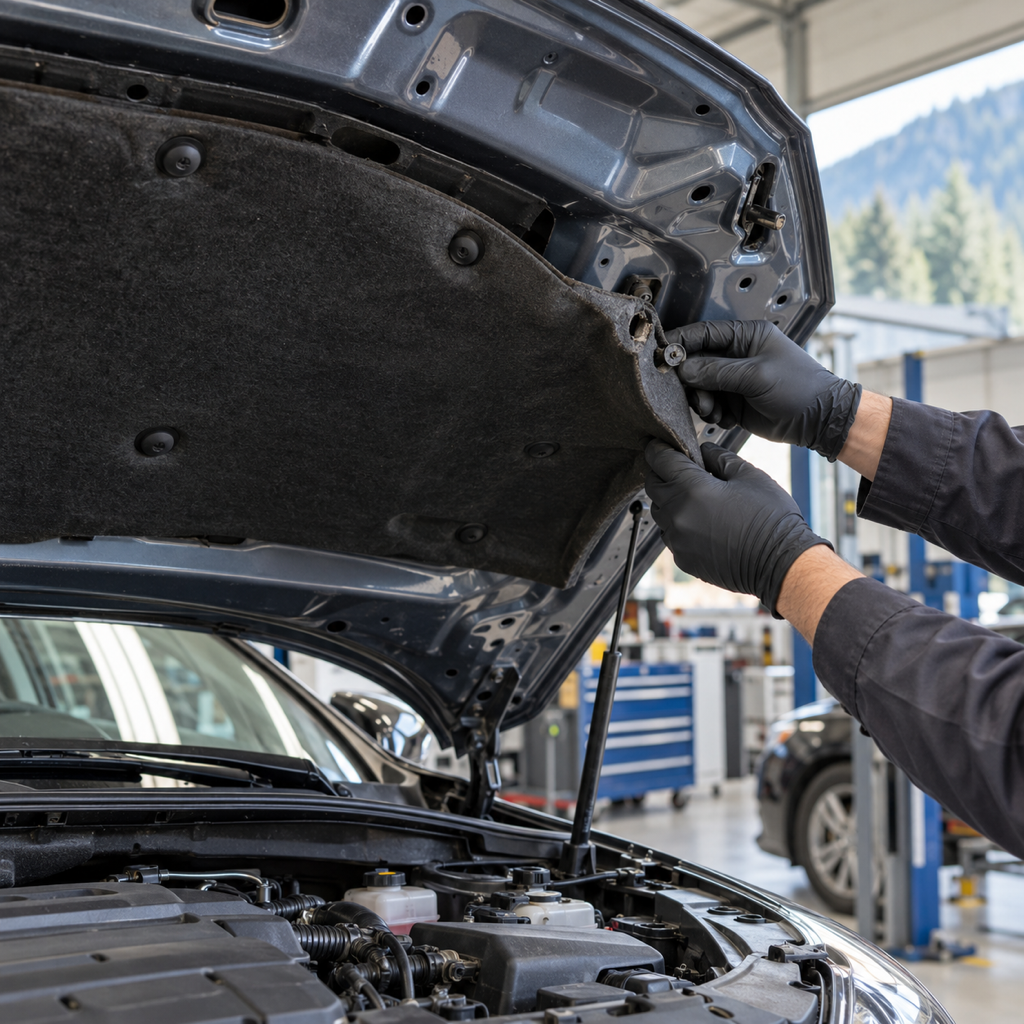
Case Study Type: Representative Collision Repair Scenario Location: Vancouver, WA Vehicle: Modern passenger vehicle Primary Concern: New rattling noise from underneath the hood after a front-end collision
The Customer’s Concern
A vehicle owner brought a recently damaged passenger vehicle to Motolux Collision Center in Vancouver, WA following a front-end collision.
The vehicle had visible damage around the front portion of the body, including damage involving the hood.
The customer's main concern was straightforward: the vehicle did not look the same after the accident, and the hood needed to be evaluated as part of the repair.
During the initial discussion, however, the customer mentioned another detail.
There was a new rattling sound coming from the front of the vehicle.
The noise was not present before the collision.
That observation became an important part of the inspection.
Why the Noise Mattered
A rattle after a collision can come from many different sources.
It may involve a body panel, trim component, mounting hardware, mechanical component, or another part of the vehicle.
The correct approach is not to assume the cause.
Instead, the repair team needs to reproduce and investigate the symptom.
Because the vehicle had sustained front-end and hood damage, the areas affected by the collision were given particular attention.
Initial Inspection
The exterior hood condition was evaluated along with the surrounding body panels.
The repair team also examined the underside of the hood.
At first, the insulation material appeared to be present.
There was no obvious large piece missing.
However, closer inspection showed that some of the retaining hardware was no longer holding the liner as securely as it should.
This provided a possible explanation for the new noise.
What Had Changed?
Before the accident, the hood liner had been securely retained.
After the collision, several retaining points had been affected.
The insulation itself was not necessarily the most obvious part of the damage.
Instead, the issue involved how the component was secured.
When the vehicle was moving, vibration allowed the affected material to move slightly, producing the rattling sound reported by the customer.
This type of issue can easily be overlooked if the inspection focuses exclusively on the outside of the hood.
Reproducing the Symptom
Because the customer's complaint involved an intermittent noise, the repair team needed to determine whether the noise could be reproduced consistently.
The vehicle was inspected and tested according to the conditions relevant to the complaint.
The area around the hood was evaluated for movement and contact.
The inspection helped establish that the noise was associated with the hood liner and its mounting points rather than simply being an unrelated sound from the engine compartment.
Why the Exterior Looked Fine
The vehicle's hood could appear acceptable when viewed from outside.
With the hood closed, the damaged or loosened retaining points were not visible.
This is a good example of why collision damage cannot always be judged from the outside.
A vehicle may look correct while a small supporting component underneath a panel has been disturbed.
Repair Evaluation
Once the affected area was identified, the repair team evaluated the condition of the liner, retaining hardware, and surrounding mounting areas.
The appropriate repair approach depended on the condition of the components and the vehicle's construction.
The goal was to restore the affected component to the condition required for proper installation rather than simply stopping the noise temporarily.
Functional Check After Repair
After the repair work was completed, the hood area was checked again.
The retaining points were evaluated to make sure the liner was properly secured.
The vehicle was then tested for the original customer complaint.
The new rattle that had been reported was no longer reproduced during the post-repair evaluation.
Why Small Noise Complaints Should Be Reported
Vehicle owners sometimes hesitate to mention small noises after an accident.
They may think:
“It is only a little rattle.”
But a new noise can provide useful information.
It can indicate that something has moved, loosened, or changed as a result of the collision or repair process.
Not every rattle is serious, but every new collision-related symptom is worth communicating to the repair facility.
What This Case Teaches
This representative case demonstrates an important principle of collision repair:
Visible damage is only part of the inspection.
A hood can look correct from the outside while components underneath it have been affected.
In this case, the customer's observation about a new sound helped direct attention toward an area that could easily have been overlooked.
The Importance of Customer and Technician Communication
The customer knew something had changed because the vehicle behaved differently after the accident.
The repair team had the technical ability to investigate the symptom.
Both pieces of information were important.
When bringing a damaged vehicle to a collision repair facility, owners should describe anything they noticed after the accident, even if the symptom seems minor.
Useful information includes:
- New rattles
- New vibrations
- New noises
- Changes in vehicle operation
- Components that appear loose
- Anything that worked differently after the collision
The Outcome
After the affected hood liner mounting issue was addressed, the vehicle was checked again for the original complaint.
The previously reported rattle was no longer observed during the post-repair evaluation.
The case also reinforced why the underside of exterior panels should be considered during collision inspections.
A Reminder for Vancouver, WA Drivers
If your vehicle has been involved in a front-end collision and you notice a new sound afterward, do not assume that it is unrelated.
A small rattle may come from something as simple as a loosened retaining point, but determining the actual source requires inspection.
For drivers in Vancouver, WA, Motolux Collision Center can evaluate collision-related body concerns and investigate new symptoms reported after an accident.
The more accurately you describe what changed, the easier it can be for the repair team to investigate the right areas.