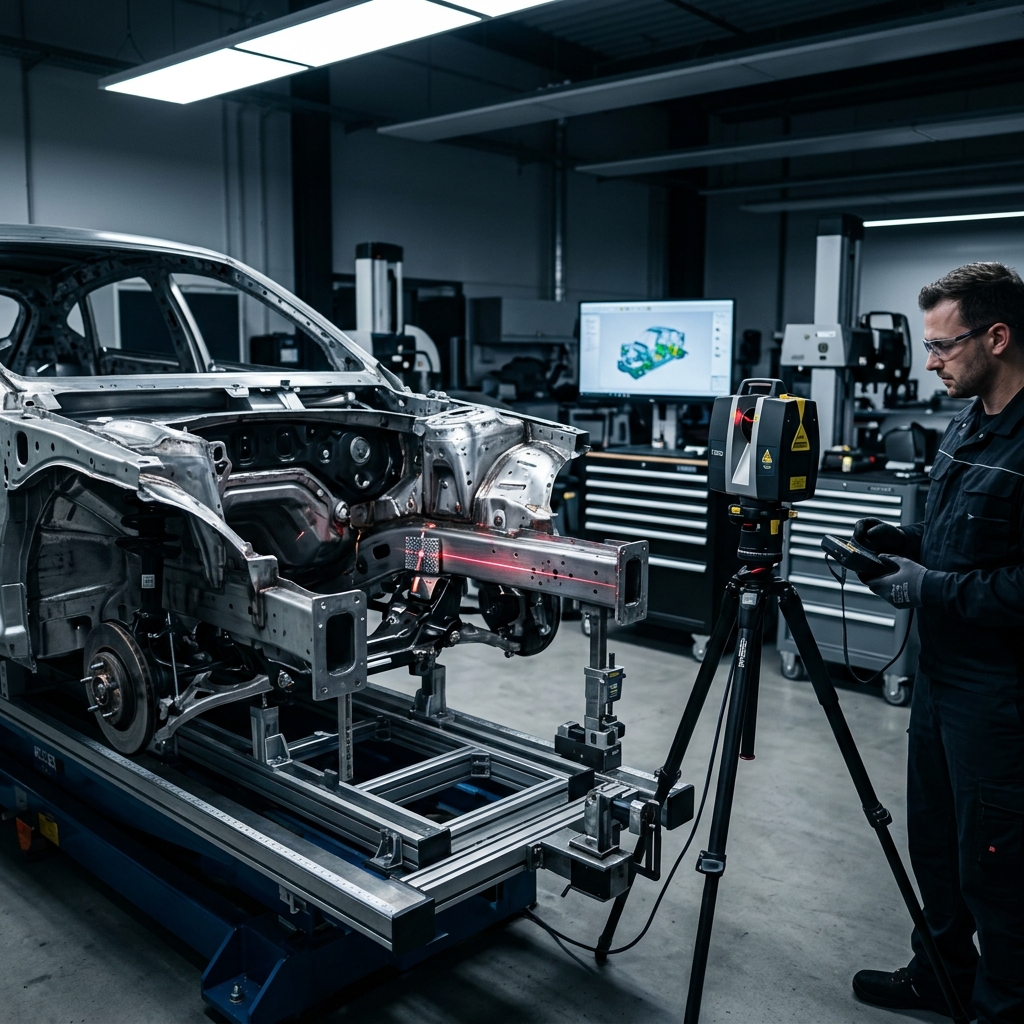
Roof racks are useful accessories for drivers who regularly transport bicycles, luggage, outdoor equipment, and other cargo. Many modern vehicles are designed with dedicated mounting locations that allow roof racks and cargo carriers to attach securely to the vehicle.
However, these mounting points are connected to the vehicle's roof structure. After a collision, damage to the roof, upper body panels, or surrounding structural areas may affect how securely the rack is attached.
The problem is not always visible. A roof rack may appear normal while one or more mounting locations have shifted, cracked, or become distorted.
For vehicle owners in Vancouver, WA, understanding the importance of roof rack mounting inspections can help prevent equipment-related problems after an accident.
Understanding Vehicle Roof Rack Mounting Systems
Roof rack systems are not identical across all vehicles. Depending on the manufacturer and vehicle design, a rack may attach through:
- Factory-installed roof rails
- Fixed mounting points
- Integrated roof channels
- Removable crossbar attachment points
- Dedicated mounting brackets
- Vehicle-specific roof rack hardware
Some systems are designed to distribute cargo loads across multiple mounting locations. Others use specific attachment points that must maintain their original position and condition.
Because the mounting arrangement varies, the correct inspection and repair procedure should always be based on the vehicle manufacturer's information.
How a Collision Can Affect Roof Rack Mounting Points
A collision involving the upper body, roof edge, side pillars, or roof structure may affect the areas used to support roof-mounted accessories.
Even when the roof rack itself remains intact, its connection to the vehicle may have been compromised.
1. Distorted Roof Mounting Locations
Roof rack mounting points are designed to maintain specific dimensions and attachment positions.
An impact near the roof edge or upper body structure can cause local deformation. This may change the position or angle of a mounting point.
As a result, a rack may not sit evenly or may become difficult to install correctly.
2. Damage to Factory Roof Rails
Some vehicles have factory-installed rails that run along the roof.
These rails depend on mounting hardware and attachment locations beneath or within the roof assembly. A collision may affect the rail, its brackets, or the surrounding bodywork.
Visible damage is not the only concern. The condition of the attachment points also matters.
3. Cracked or Damaged Mounting Hardware
Roof racks often use vehicle-specific brackets, fasteners, covers, and locking components.
Following an impact, some hardware may become cracked, bent, loose, or incorrectly seated.
Reusing damaged hardware without checking its condition can affect the reliability of the attachment.
4. Changes to Roof Panel Geometry
The roof panel and surrounding structure may be affected during certain collisions.
If the roof surface or mounting area is no longer in its original position, accessories may not align correctly.
This is particularly important for systems that require precise contact between the rack feet and the vehicle's mounting surfaces.
5. Water Protection Around Mounting Locations
Certain roof rack designs use seals, gaskets, or protective covers around their mounting points.
If collision damage disturbs these components, water may enter through affected areas.
The correct assessment should consider the mounting system and the surrounding roof construction rather than treating the accessory as an isolated component.
Warning Signs That Your Roof Rack May Need Inspection
After a collision, pay attention to changes in the roof rack or its attachment.
Possible warning signs include:
- A roof rail appears uneven or displaced.
- One rack foot does not sit flush against the roof.
- Mounting hardware no longer fits correctly.
- A bracket or cover appears cracked.
- The rack moves or makes unfamiliar noises.
- The roof panel around an attachment point looks distorted.
- Water appears near a previously dry mounting location.
These signs do not establish the exact cause of the problem. They indicate that the rack and its mounting locations should be evaluated.
Why You Should Not Carry Heavy Cargo Before Inspection
A roof rack is designed to carry loads within specific manufacturer limits.
Those limits assume that the rack, hardware, and vehicle mounting points are in suitable condition.
After a collision, that assumption may no longer be valid. A distorted bracket or weakened attachment point can affect the way forces are transferred between the rack and the vehicle.
Until the condition of the mounting system is confirmed, avoid carrying cargo on a potentially damaged rack.
Also remember that roof load limits can include the weight of the rack and accessories themselves. Always follow the vehicle and rack manufacturer's instructions.
What Should a Post-Collision Roof Rack Inspection Include?
A proper assessment should consider the complete mounting arrangement.
Roof Structure and Mounting Areas
The roof panel, surrounding body structure, and designated attachment locations should be checked for deformation or visible damage.
Roof Rails and Crossbar Connections
Inspect the rails, crossbars, brackets, and connection points for cracks, bending, displacement, or other signs of impact.
Fasteners and Mounting Hardware
Check the condition and fitment of relevant fasteners, brackets, covers, and vehicle-specific hardware.
Damaged or questionable hardware should be evaluated according to manufacturer requirements.
Seals and Protective Components
Where the design uses seals or gaskets, check whether they remain correctly positioned and whether the surrounding area shows signs of water entry.
Fitment and Compatibility
The rack should be checked for correct fitment according to the vehicle and accessory manufacturer's specifications. A rack that can be physically attached is not necessarily correctly installed.
Factory Roof Rails Versus Aftermarket Roof Racks
It is important to distinguish between factory-installed roof rails and aftermarket accessories.
Factory rails are generally integrated into a vehicle-specific mounting arrangement. Aftermarket systems may use clamps, brackets, fixed points, or other attachment methods.
A collision can affect either type, but the inspection requirements may differ.
The correct procedure depends on the vehicle model, roof construction, accessory manufacturer, and location of the damage.
For this reason, replacing an accessory without examining the underlying attachment area may not address the actual problem.
Why This Inspection Matters for Vancouver Drivers
Many drivers in Vancouver, WA, use roof racks for recreational travel, outdoor activities, and everyday transportation.
A damaged mounting point can become a practical concern when the vehicle is used to carry equipment.
An inspection after a collision helps determine whether the rack can continue to be used, whether hardware needs replacement, or whether the vehicle's mounting area requires body repair.
The important point is to evaluate the complete attachment system before returning to normal use.
How Motolux Collision Center Can Help
Motolux Collision Center provides collision damage assessment and repair services in Vancouver, WA.
If your vehicle has been involved in an accident that affected its roof, upper body, or surrounding panels, mention any roof rack or accessory concerns during the assessment.
The inspection can help identify visible damage to the relevant body areas and determine whether further evaluation of the mounting system is needed.
Where manufacturer-specific procedures or specialized accessory expertise are required, the appropriate specialist may need to be involved.
Frequently Asked Questions
1. Can a roof rack be damaged even if it looks normal after an accident?
Yes. The rack may appear undamaged while its mounting brackets, fasteners, or vehicle attachment points have been affected.
2. Should I remove my roof rack after a collision?
If it appears loose, displaced, cracked, or incorrectly fitted, avoid using it and arrange an inspection. Follow the accessory manufacturer's instructions for safe removal.
3. Can roof rack mounting damage cause water leaks?
It can, depending on the vehicle's design and the location of the damage. Disturbed seals or damaged roof mounting areas may create a path for water entry.
4. Can I continue carrying bicycles or luggage on my roof after an accident?
Do not assume the system is safe simply because the rack remains attached. Have the mounting points and hardware assessed before carrying cargo again.
5. Does every roof rack need to be replaced after a collision?
No. The decision depends on the condition of the rack, its hardware, the vehicle mounting points, and manufacturer requirements. Some components may remain serviceable while others require replacement.
Conclusion
Roof racks depend on secure mounting points and correctly fitted hardware. A collision involving the roof or upper body structure can affect these components even when the damage is not immediately obvious.
Checking the rack, attachment hardware, roof rails, and surrounding body structure helps determine whether the system remains suitable for use.
If your vehicle has experienced roof or upper-body collision damage, contact Motolux Collision Center in Vancouver, WA, to discuss an appropriate damage assessment.